Evidence, organised

Muscle & Performance

Explore claims about muscle growth, strength, endurance and training performance. Compare the evidence on creatine, protein, caffeine and popular exercise trends.

More muscle, a better workout and greater fat burning are different outcomes. Our investigations separate them, explain the role of training and put the size of any benefit in context.

For a closer look at one ingredient, visit the Creatine evidence hub.

Questions to explore

More investigations to explore

Explore relevant Evidence Shelf recommendations →

Filter by topic, evidence or outcome

Browse by category

Evidence rating

Ratings describe support for the exact claim, not whether an ingredient is good or bad. Investigations with mixed claim-specific ratings remain in All ratings until an overall rating is designated.

More filters

Choose an ingredient or topic and an outcome to narrow your results.

Browse published investigations below.

Evidence vs Hype editorial illustration of a calm adult doing gentle supported resistance exercise with a rehabilitation professional nearby.

Can Exercise Really Reduce Cancer-Related Fatigue?

MODERATE — Appropriately adapted exercise can reduce cancer-related fatigue during and after treatment. Evidence is moderate, and the programme needs to fit the person's condition, treatment and capacity.

Read the evidence →
Evidence vs Hype editorial illustration of an adult performing an abdominal exercise on a mat, without a body-transformation comparison.

Can Ab Exercises Really Burn Belly Fat Specifically?

WEAK — Ab exercises are not a reliably established way to choose where body fat comes off. Most pooled evidence does not support spot reduction, although a small positive trial deserves fair consideration.

Read the evidence →
Evidence vs Hype editorial still life of two different resistance-training stations beside a stopwatch, illustrating paired exercises.

Can Supersets Build Muscle in Less Time?

MODERATE — Well-designed supersets can shorten workouts while producing similar gains in the available studies. Evidence is moderate, and exercise pairing matters: a shorter session can also feel harder.

Read the evidence →
Evidence vs Hype editorial illustration of a dumbbell being lowered under control beside a simple analogue stopwatch.

Do Super-Slow Reps Really Build More Muscle?

WEAK — Deliberately slowing every repetition has not been shown to reliably build more muscle. A range of controlled tempos can work; extra time under tension is not automatically extra growth.

Read the evidence →
Evidence vs Hype editorial illustration of a lifter pausing a dumbbell set with controlled form, asking if every set must reach failure.

Do You Have to Train to Failure to Build Muscle?

WEAK — You do not have to take every working set to momentary muscular failure to build muscle. Training effort still matters, and stopping far short of failure is a different question.

Read the evidence →
Evidence vs Hype editorial illustration of running shoes between a soft morning window and an evening training scene.

Is Morning Exercise Really Better Than Evening Exercise?

UNCLEAR — No single time of day is established as best for everyone's health and training gains. Some effects depend on the outcome, the person and when performance is tested.

Read the evidence →
Evidence vs Hype editorial illustration of a runner on a warm sunlit track with heat shimmer and water nearby.

Does Training in the Heat Really Improve Endurance?

MODERATE — Repeated exercise in heat can improve endurance performance in hot conditions. Evidence is moderate for that use; it does not establish that hotter training always improves fitness or that sauna s...

Read the evidence →
Evidence vs Hype editorial illustration of an unbranded electrical stimulation suit alongside conventional training equipment.

Can EMS Suits Really Replace Going to the Gym?

WEAK — Whole-body EMS can provide a training stimulus, often alongside active exercise. Evidence that a brief session replaces the broader benefits of conventional exercise is weak.

Read the evidence →
Evidence vs Hype artwork with a runner, banana and unbranded sports bottle, asking whether carbohydrates help long workouts.

Do Carbs During Long Workouts Really Improve Endurance?

STRONG — Carbohydrate during prolonged endurance exercise can improve performance compared with no carbohydrate. The benefit depends on the event and fuelling context; it does not mean every short workout ne...

Read the evidence →
Evidence vs Hype artwork showing an adult performing a standing calf stretch, asking whether static stretching improves flexibility.

Does Static Stretching Really Make You More Flexible?

STRONG — Regular static stretching improves joint range of motion. It does not follow that stretching permanently lengthens every muscle, prevents all injuries or needs to be painful to work.

Read the evidence →
Evidence vs Hype artwork with a barbell and stopwatch, asking whether cluster sets produce bigger gains.

Do Cluster Sets Really Build More Strength and Muscle?

WEAK — Cluster sets can reduce fatigue and help preserve repetition speed. They are a useful training option, but long-term research does not establish a general advantage for muscle growth or maximal streng...

Read the evidence →
Evidence vs Hype artwork showing a hand using a grip trainer and an older adult walking, asking whether grip training extends life.

Can Training Your Grip Strength Really Help You Live Longer?

WEAK — Lower grip strength is consistently associated with higher mortality risk. That does not demonstrate that grip-specific training extends life. Improving a predictor is not automatically the same as ch...

Read the evidence →
Evidence vs Hype artwork showing gym weights and training planners, asking whether three or six weekly training days builds more muscle.

Does Training Six Days a Week Build More Muscle Than Three?

MODERATE — Six gym days are not automatically better for muscle growth when weekly training volume is matched. More days can help distribute work, and strength may respond differently. Three days is not univ...

Read the evidence →
Unbranded protein-style gummies beside a protein powder scoop and plain shaker illustrate the comparison of protein sources and serving sizes.

Are Protein Gummies Really as Effective as Protein Shakes?

WEAK — A gummy can supply useful protein, but equivalence depends on the amount and type of protein, not the sweet format. Current products differ in serving size and amino-acid sources. We did not identify ...

Read the evidence →
An adult woman performs a small two-footed jump in an exercise room beside weights, illustrating impact exercise and bone-health claims.

Can 50 Jumps Every Morning Really Strengthen Your Bones?

MODERATE — Brief jump training can improve hip bone mineral density in some people, and 50 jumps has genuinely been studied. The same programme did not benefit every group. Morning timing, exactly 50 repetit...

Read the evidence →
Orange Cordyceps militaris fruiting bodies and a distant runner illustrate the endurance and VO₂ max investigation.

Do Cordyceps Supplements Really Improve Endurance and VO₂ Max?

LIMITED — There are encouraging human findings, but they are inconsistent and highly dependent on the preparation and study. Some trials use mushroom blends, and results in recreationally active or older adu...

Read the evidence →
A middle-aged woman holding a dumbbell beside a creatine scoop illustrates menopause-specific muscle and strength research.

Does Creatine Help Women During Menopause?

MODERATE — Creatine can add small average muscle and strength benefits in postmenopausal women, particularly alongside resistance training. It has not consistently improved bone density, and the direct evide...

Read the evidence →
Three sealed research-style vials and a skin-texture magnifier illustrate the GLOW peptide blend investigation.

Does the GLOW Peptide Blend Really Repair Skin and Heal Injuries?

WEAK — Direct controlled human evidence for the GLOW combination was not identified in this review. Repair-related biology and limited component research do not establish that mixing these peptides improves ...

Read the evidence →
Protein shake, fibre powder, water and supplement containers illustrate GLP-1 supplement bundle claims.

Do GLP-1 Supplement Stacks Really Prevent Side Effects and Muscle Loss?

WEAK — Nutrition support matters during GLP-1 treatment, but that does not validate a proprietary bundle. Protein may help fill an intake gap, fibre may help some constipation, and rehydration may be needed ...

Read the evidence →
Evidence vs Hype conceptual artwork investigating balance exercises prevent falls, using subject-specific unbranded imagery.

Do Balance Exercises Really Prevent Falls in Older Adults?

STRONG — Yes. Programmes that challenge balance and functional movement reduce falls in community-dwelling older adults. The evidence concerns repeated, appropriate training, not a single balance trick or a ...

Read the evidence →
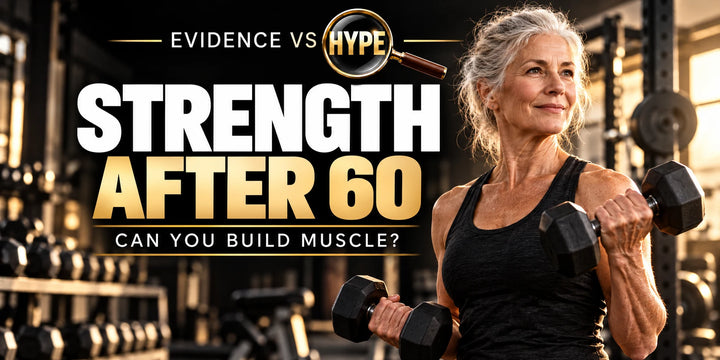
Evidence vs Hype conceptual artwork investigating build muscle after 60, using subject-specific unbranded imagery.

Can Strength Training Really Build Muscle After 60?

STRONG — Yes. Older adults retain the ability to gain strength and lean tissue through appropriately progressed resistance training. Average gains vary, and increasing strength is not the same as guaranteein...

Read the evidence →
Evidence vs Hype conceptual artwork investigating cardio blood pressure, using subject-specific unbranded imagery.

Does Regular Cardio Really Lower Blood Pressure?

STRONG — Yes. Randomised trials support an average reduction in resting blood pressure with regular aerobic training. The effect is useful but variable, and a lower reading after one workout is different fro...

Read the evidence →
Evidence vs Hype conceptual artwork investigating barefoot shoes, using subject-specific unbranded imagery.

Do Barefoot Shoes Really Strengthen Your Feet and Prevent Injuries?

LIMITED — Minimalist shoes may improve some measures of foot strength. Evidence that they reliably prevent running injuries is much less convincing, and changing footwear alters the loads your tissues must t...

Read the evidence →
Evidence vs Hype conceptual artwork investigating boy kibble diet, using subject-specific unbranded imagery.

Is the Viral Boy Kibble Diet Really Healthy for Building Muscle?

WEAK — A beef-and-rice meal can provide protein and training fuel. There is no established special muscle-building advantage to the viral label, and whether the overall diet is nutritionally adequate depends...

Read the evidence →
Evidence vs Hype conceptual artwork investigating PEMF sleep mat, using subject-specific unbranded imagery.

Do PEMF Sleep Mats Really Improve Deep Sleep and Muscle Recovery?

WEAK — Some pulsed-magnetic treatments have reported sleep benefits, but devices and outcomes differ. Evidence that ordinary whole-body sleep mats reliably increase measured deep sleep or speed training reco...

Read the evidence →
Evidence vs Hype conceptual artwork investigating TB-500, using subject-specific unbranded imagery.

Does TB-500 Really Heal Tendons, Ligaments and Injuries Faster?

WEAK — Reliable human evidence for faster injury healing from the TB-500 fragment has not been established. Research on full-length thymosin beta-4 cannot simply be transferred to a differently identified pr...

Read the evidence →
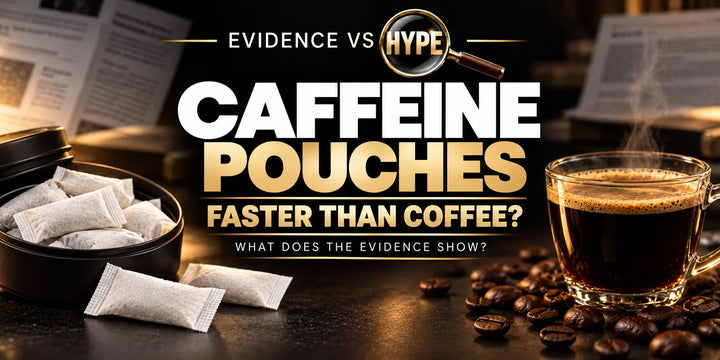
Evidence vs Hype artwork comparing unbranded caffeine pouches with black coffee, asking whether pouches work faster.

Do Caffeine Pouches Work Faster or Better Than Coffee?

WEAK — Reliable evidence that pouches outperform coffee is missing. A prominent five-form absorption study was retracted; gum findings cannot validate pouches.

Read the evidence →
Evidence vs Hype lymphatic-walking artwork showing an adult walking with a relaxed arm swing, asking whether it beats a normal walk.

Is Lymphatic Walking Better Than Ordinary Walking for Swelling?

WEAK — Movement supports lymph transport, but superiority of a branded lymphatic walk over ordinary walking has not been established.

Read the evidence →
Evidence vs Hype slow-jogging artwork showing an adult gently running outdoors and asking about mood and focus in ten minutes.

Can Ten Minutes of Slow Jogging Really Boost Mood and Focus?

LIMITED — A small randomised crossover trial found acute mood and executive-function benefits versus rest. It did not show superiority to walking.

Read the evidence →
Evidence vs Hype pelvic floor investigation artwork showing a fully clothed woman seated on a chair beside an exercise mat; the scene does not demonstrate exercise technique.

Can a Five-Minute Pelvic Floor Workout Really Stop Bladder Leaks?

WEAK — Pelvic floor muscle training is an evidence-based treatment, especially for women with stress incontinence. Benefits usually require correct, repeated practice over months; a short routine is not a gu...

Read the evidence →
Evidence vs Hype tai chi walking artwork with an older adult practising a slow step and another adult walking in a park.

Is Tai Chi Walking Really Better Than Ordinary Walking for Balance and Longevity?

WEAK — Traditional tai chi can improve balance and may help prevent falls in older adults. That does not establish that a viral walking routine is superior for overall fitness or longevity.

Read the evidence →
Evidence vs Hype creatine gummies investigation artwork showing red gummies beside a scoop of creatine powder.

Are Creatine Gummies Really as Effective as Creatine Powder?

LIMITED — A small human trial supports selected benefits from one creatine gummy. It does not establish equivalence to powder, and commercial testing has found major batch-content differences.

Read the evidence →
Evidence vs Hype exercise-and-mood investigation artwork showing an adult walking in a park, with a 15-minute timer inset. The 21% headline is a question, not a promised result.

Can 15 Minutes of Exercise Improve Your Mental Health by 21%?

WEAK — The exact 21% claim comes from a small ASICS comparison with wellness retreats. Independent evidence supports exercise for mood, without guaranteeing that percentage.

Read the evidence →
Evidence vs Hype ergonomic-pillow investigation artwork showing an adult sleeping on their side on a contoured pillow. Conceptual illustration without a promise of neck-pain relief.

Can Ergonomic Side-Sleeper Pillows Really Fix Neck Pain?

LIMITED — Some pillows may reduce neck symptoms, but contour designs do not reliably improve sleep or outperform ordinary pillows. Fit matters more than a cure claim.

Read the evidence →
Evidence vs Hype floor-mattress artwork showing a thin Japanese shikibuton on tatami and a conceptual spine inset. It does not depict proven pain relief.

Does Sleeping on a Japanese Floor Mattress Improve Back Pain?

WEAK — A Japanese floor mattress has no proven back-pain advantage. We assess firmness trials, comfort and the gap in direct floor-sleeping evidence.

Read the evidence →
Evidence vs Hype beef-protein artwork with unbranded powder tubs, scoops, beef and milk cues. Conceptual comparison, not a demonstration of superior muscle growth.

Is Beef Protein Powder Really Better Than Whey Protein?

WEAK — Beef powder has no demonstrated muscle-building advantage over whey. We assess training trials, collagen content and amino-acid differences.

Read the evidence →
Evidence vs Hype: dumbbells, a measuring tape and a gym torso, with a conceptual skeletal-muscle inset. No measured body transformation.

Can You Really Build Muscle and Lose Fat at the Same Time?

MODERATE — Body recomposition is possible under suitable conditions. We assess trials, energy deficits, protein, training experience and the difference between lean mass and muscle.

Read the evidence →
Evidence vs Hype: tart cherries and cherry juice beside a dumbbell and workout towel, with a strength-training grip inset. Conceptual recovery artwork.

Does Tart Cherry Juice Really Speed Up Muscle Recovery?

LIMITED — Tart cherry may support selected recovery outcomes. We compare soreness, strength, performance and inflammatory markers, including conflicting 2026 reviews.

Read the evidence →
Evidence vs Hype: an empty open DEXA scanning table and scanner arm with a gold-ring equipment inset. Conceptual artwork with no measured body-fat result.

How Accurate Are DEXA Scans for Measuring Body Fat?

WEAK — DEXA is a useful body-composition tool, but its body-fat percentage is an estimate, not an exact truth. It can reproduce measurements well under standardised conditions while still differing from a re...

Read the evidence →
Evidence vs Hype: feet using a compact pedal exerciser beneath an office desk, with a gold-ring pedal inset. Conceptual desk-cycling artwork.

Do Under-Desk Exercise Bikes Really Improve Your Health?

LIMITED — Pedalling while you work uses more energy than sitting still and may improve some post-meal metabolic responses. That is a useful opportunity for movement. It does not prove that a desk bike cancel...

Read the evidence →
Evidence vs Hype: running and barbell strength training in the established black, white and gold artwork. Conceptual illustration of concurrent training.

Does Hybrid Training Really Build Muscle and Endurance at the Same Time?

MODERATE — You can build muscle and aerobic fitness in the same training programme. Cardio does not automatically kill your gains. But doing both well is different from maximising both: explosive power, fati...

Read the evidence →
Evidence vs Hype illustration of running shoes and an adult jogging in a park, subtle calendar with two highlighted squares but no small text; artwork represents the claim under investigation.

Can Weekend-Only Workouts Be as Healthy as Exercising Every Day?

People who accumulate sufficient weekly activity in one or two days show many of the same favourable health associations as people who spread it out. That is encouraging, but it does not prove identical bene...

Read the evidence →
Evidence vs Hype illustration of an adult woman strength training in modest gym clothes and a discreet abstract calendar inset; artwork represents the claim under investigation.

Does Cycle Syncing Your Workouts Really Improve Muscle Growth and Performance?

Hormones change across the menstrual cycle, but a universal phase-based workout schedule has not been shown to reliably improve muscle growth or performance. Adjusting training to symptoms is a different, re...

Read the evidence →
Track sprinter, bicarbonate powder and water in the black, white and gold Evidence vs Hype featured image.

Does Sodium Bicarbonate Really Improve Athletic Performance?

MODERATE — Does sodium bicarbonate improve performance? We examine buffering, task-specific evidence, a September 2026 review and the practical limits of gut tolerance.

Read the evidence →
Walking outdoors after a meal and glucose meter in the black, white and gold Evidence vs Hype featured image.

Does Walking for 10 Minutes After Eating Really Lower Blood Sugar?

MODERATE — Does a ten-minute walk after eating lower blood sugar? We examine crossover trials, a newer glucose study and the limits of short-term outcomes.

Read the evidence →
Assisted Nordic hamstring curl and football equipment in the black, white and gold Evidence vs Hype featured image.

Can Nordic Hamstring Curls Really Prevent Injuries?

STRONG — Can Nordic hamstring curls prevent injuries? We examine a large football trial and pooled injury outcomes, with realistic limits and practical progression.

Read the evidence →
Wall sit exercise and blood pressure cuff in the black, white and gold Evidence vs Hype featured image.

Can Wall Sits Really Lower Your Blood Pressure?

MODERATE — Can wall sits lower blood pressure? We examine randomised isometric-training evidence, the size of the effect and how to interpret safe practical use.

Read the evidence →
Unbranded turkesterone supplement and weight training imagery in the black, white and gold Evidence vs Hype featured image.

Does Turkesterone Really Build Muscle Like a Natural Steroid?

WEAK — Does turkesterone build muscle? We examine the limited human study, its weaknesses and why research on other ecdysteroids cannot validate every product.

Read the evidence →
Tongkat ali root and supplement imagery in the black, white and gold Evidence vs Hype featured image.

Does Tongkat Ali Really Increase Testosterone and Muscle Growth?

LIMITED — Does tongkat ali raise testosterone and build muscle? We separate hormone findings from performance outcomes and examine extract-specific safety concerns.

Read the evidence →
Unbranded peptide vials and recovery imagery in the black, white and gold Evidence vs Hype featured image.

Do CJC-1295 and Ipamorelin Peptides Really Boost Recovery and Reverse Ageing?

WEAK — Do CJC-1295 and ipamorelin improve recovery or reverse ageing? We examine human hormone studies, regulatory concerns and the missing clinical outcomes.

Read the evidence →
Massage gun and post-exercise recovery imagery in the black, white and gold Evidence vs Hype featured image.

Do Massage Guns Really Remove Lactic Acid and Speed Recovery?

WEAK — Do massage guns remove lactic acid? We separate lactate physiology from short-term flexibility, soreness and actual recovery of performance.

Read the evidence →
Resistance exercise with a blood flow restriction cuff in the black, white and gold Evidence vs Hype featured image.

Can Blood Flow Restriction Training Replace Heavy Weightlifting?

MODERATE — Can blood flow restriction replace heavy lifting? We compare muscle growth, strength gains and the practical safety requirements of low-load BFR.

Read the evidence →
Resistance training through different movement ranges in the black, white and gold Evidence vs Hype featured image.

Do Lengthened Partial Reps Build More Muscle Than Full Reps?

UNCLEAR — Do lengthened partial reps build more muscle? We compare direct human trials with the different question of long versus short muscle lengths.

Read the evidence →
Seated calf movement and metabolic testing imagery in the black, white and gold Evidence vs Hype featured image.

Can Soleus Push-Ups Really Lower Blood Sugar While Sitting?

LIMITED — Can seated soleus push-ups lower blood sugar? We examine the original experiment, a prediabetes pilot and the limits of this promising movement.

Read the evidence →
Backward walking and knee rehabilitation imagery in the black, white and gold Evidence vs Hype featured image.

Can Walking Backwards Really Repair Your Knees?

WEAK — Trials support pain and function benefits when backward walking is added to knee rehabilitation. Structural repair is a stronger, unproven claim.

Read the evidence →
Incline treadmill workout imagery in the black, white and gold Evidence vs Hype featured image.

Is the Viral 12-3-30 Treadmill Workout Better Than Running?

LIMITED — A small direct trial compared 12-3-30 with running. Energy expenditure, fuel use, fat loss and long-term fitness are different questions.

Read the evidence →
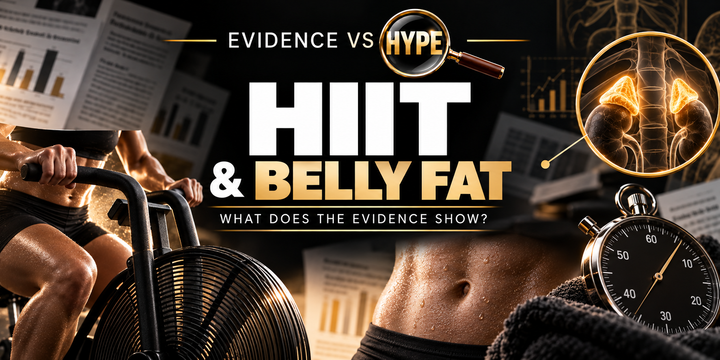
Interval training and fitness imagery in the black, white and gold Evidence vs Hype featured image.

Does HIIT Really Raise Cortisol and Cause Belly Fat?

WEAK — Cortisol can rise after intense exercise, but that temporary response does not establish belly-fat gain. We compare hormone and body-composition evidence.

Read the evidence →
Evidence vs Hype: Does Fasted Cardio Really Burn More Body Fat? Conceptual editorial illustration.

Does Fasted Cardio Really Burn More Body Fat?

WEAK — Before-breakfast cardio can make the body use more fat as fuel during that session. That is a real metabolic observation, but it is not the same as demonstrating greater loss of stored body fat over w...

Read the evidence →
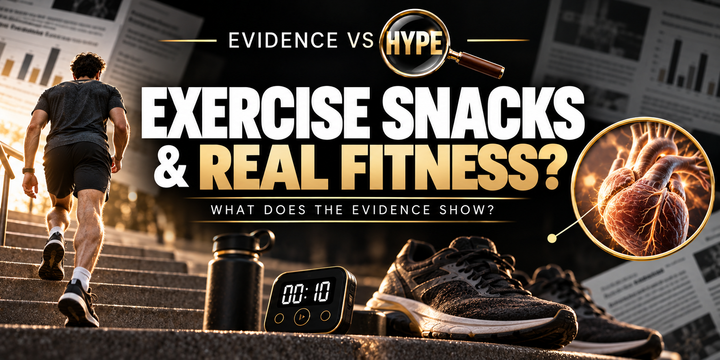
Evidence vs Hype: Can Exercise Snacking Replace Going to the Gym? Conceptual editorial illustration.

Can Exercise Snacking Replace Going to the Gym?

LIMITED — A minute or two of movement fits into a busy day more easily than a long session. Structured exercise snacks can improve fitness, especially when the alternative is little activity. That does not e...

Read the evidence →
Evidence vs Hype: Does Pilates Build Longer, Leaner Muscles Than Weightlifting? Conceptual editorial illustration.

Does Pilates Build Longer, Leaner Muscles Than Weightlifting?

WEAK — The promise is an attractive one: get stronger and more flexible while creating a distinctive long, lean shape. Pilates can be worthwhile exercise, but the proposed contrast with short, bulky weightli...

Read the evidence →
Evidence vs Hype: Can Dead Hangs Really Decompress Your Spine and Fix Your Posture? Conceptual editorial illustration.

Can Dead Hangs Really Decompress Your Spine and Fix Your Posture?

WEAK — A few seconds on a pull-up bar can feel like a welcome stretch. Feeling temporarily less compressed is not proof that a dead hang repairs discs, cures back pain or permanently changes posture.

Read the evidence →
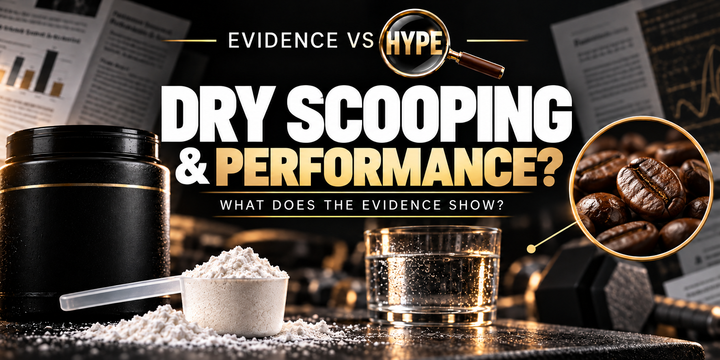
Evidence vs Hype: Does Dry Scooping Pre-Workout Make Supplements More Powerful? Conceptual editorial illustration.

Does Dry Scooping Pre-Workout Make Supplements More Powerful?

WEAK — A concentrated taste, a caffeine rush or skin tingles can make pre-workout feel powerful. Those sensations do not demonstrate better absorption or a stronger training effect from taking powder without...

Read the evidence →
Evidence vs Hype: Does the 75 Hard Challenge Actually Make You Healthier? Conceptual editorial illustration.

Does the 75 Hard Challenge Actually Make You Healthier?

WEAK — Two workouts a day, a gallon of water and no missed tasks: 75 Hard offers a very clear challenge. Its useful ingredients should not be confused with proof that the exact rulebook makes people healthie...

Read the evidence →
Evidence vs Hype: walking pads and weight loss, showing a walking treadmill beneath a working desk.

Do Walking Pads Really Help You Lose Weight While Working?

LIMITED — Walking while working burns more energy than sitting. The evidence for sustained weight loss is much less certain than the immediate calorie effect.

Read the evidence →
Evidence vs Hype: calisthenics versus weights, with a push-up, barbell and muscle inset.

Can Military Calisthenics Build as Much Muscle as Weightlifting?

LIMITED — Bodyweight exercises can build muscle when the resistance is challenging and progressive. Matching weights across every muscle group is a much broader claim.

Read the evidence →
Evidence vs Hype: dead bug exercise and back pain, with a person in the starting position and a core anatomy inset.

Can the Dead Bug Exercise Really Fix Lower-Back Pain?

LIMITED — Dead bugs can be a useful part of exercise rehabilitation. But trials of a whole programme do not establish that this single movement fixes back pain.

Read the evidence →
Evidence vs Hype black, white and gold investigation image asking More Protein = Healthier?, with protein-labelled cereal, a bar and yoghurt with oats and berries.

Proteinmaxxing: Does Adding Protein Make Any Food Healthier?

WEAK — Added protein can fill a genuine nutritional gap, but it does not automatically make any food healthier. We examine muscle benefits, fullness, food quality and the protein health halo.

Read the evidence →
Evidence vs Hype coffee versus caffeine investigation with unbranded coffee, capsules, water and cycling equipment in a balanced comparison.

Is Coffee as Effective as Caffeine Supplements for Exercise?

MODERATE — Coffee can deliver an exercise benefit. Small matched-dose trials support it, but exact equivalence to every supplement across tasks remains uncertain.

Read the evidence →
Evidence vs Hype caffeine tolerance investigation with coffee, a stopwatch and cycling handlebar; no performance improvement is depicted.

Does Caffeine Tolerance Eliminate Its Exercise Benefits?

WEAK — Habitual caffeine use does not universally eliminate exercise benefits. Some controlled studies show attenuation, while regular consumers often retain a response.

Read the evidence →
Evidence vs Hype investigation of protein powder and heavy metals, featuring clean unbranded powder, a sample vial and magnifying glass; metals are not depicted as visible contamination.

Are Protein Powders Really Contaminated With Heavy Metals?

STRONG — Some tested powders contain measurable metals. Detection alone does not establish harmful exposure; product, amount and total intake matter.

Read the evidence →
Evidence vs Hype casein before-bed investigation with unbranded powder, milk, bedside clock and bedding in black, white and gold.

Does Casein Protein Before Bed Really Increase Muscle Growth?

LIMITED — Pre-sleep protein can increase overnight synthesis, but a unique long-term growth advantage over the same adequate protein consumed during the day remains uncertain.

Read the evidence →
Evidence vs Hype post-workout protein investigation with an unbranded shaker, powder scoop, dumbbell and analogue clock; no fixed deadline is implied.

Do You Need Protein Immediately After a Workout?

WEAK — A rigid 30-minute post-workout protein deadline is not supported. Adequate daily intake and consistent training matter more than an urgent shake.

Read the evidence →
Evidence vs Hype whey versus plant protein investigation with unbranded powder scoops, milk, soybeans and peas in a balanced black, white and gold composition.

Is Whey Protein Really Better Than Plant Protein for Muscle Growth?

LIMITED — Whey is an efficient protein source, but consistent superiority over adequately dosed plant powders is not established. Soy and well-formulated alternatives can support training.

Read the evidence →
Evidence vs Hype creatine and bone-health investigation with powder and scoop, an anatomical hip model and conceptual bone detail; no treatment outcome is implied.

Does Creatine Improve Bone Health or Prevent Osteoporosis?

WEAK — Creatine has not established an additional bone-density or osteoporosis-prevention benefit. Promising bone-geometry signals do not prove fewer fractures.

Read the evidence →
Evidence vs Hype creatine and endurance investigation with powder and scoop, running shoe, cyclists and a conceptual magnified powder inset.

Does Creatine Really Improve Endurance Performance?

WEAK — Creatine has not shown a reliable overall endurance benefit in trained athletes. Repeated high-intensity efforts are a narrower, separate claim.

Read the evidence →
Evidence vs Hype creatine and plant diets investigation with unbranded powder, scoop, lentils, tofu and greens.

Do Vegetarians Benefit More from Creatine Supplementation?

LIMITED — Vegetarians often have lower initial muscle creatine stores, but greater strength, muscle or sport gains than omnivores are not consistently established.

Read the evidence →
Evidence vs Hype creatine timing investigation with powder and scoop, an analogue clock, dumbbell and conceptual magnified powder.

Should You Take Creatine Before or After a Workout?

LIMITED — Direct trials have not established that taking creatine before or after training reliably produces superior strength or muscle gains. Consistency is more defensible than a narrow window.

Read the evidence →
Evidence vs Hype creatine and ageing investigation, with creatine powder, an older adult holding a dumbbell and a conceptual muscle inset.

Does Creatine Help Older Adults Build Strength and Preserve Muscle?

MODERATE — Creatine can modestly improve strength gains alongside resistance training in healthy older adults. Muscle mass, function and frailty claims need more evidence.

Read the evidence →
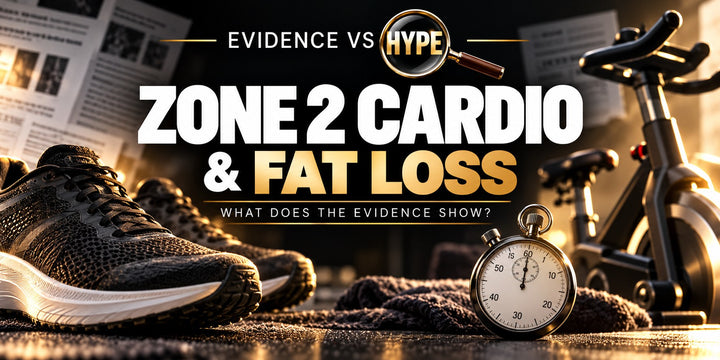
Evidence vs Hype Zone 2 cardio and fat loss investigation with running shoes and exercise bicycle

Is Zone 2 Cardio Really the Best Way to Burn Fat and Improve Longevity?

WEAK — Comfortable aerobic exercise can improve fitness and health. Burning a higher proportion of fat during a session does not prove superior long-term fat loss, and no intensity has been established as th...

Read the evidence →
Evidence vs Hype caffeine and exercise performance investigation with coffee, running shoes and stopwatch

Does Caffeine Really Improve Endurance and Workout Performance?

STRONG — Caffeine reliably improves endurance performance on average. Benefits for strength, power and repeated efforts are usually smaller and less consistent, and some people mainly experience side effects.

Read the evidence →

Browse the complete Muscle & Performance collection →

Evidence first. Products second.

The Evidence Shelf: Muscle & Performance

Start with training, suitable food and recovery. These choices address different needs; they are not a supplement stack.

Editorial imagery for the muscle performance buying guide

UK-led options. Evidence applies to the defined use; formulas and guidance can differ by country.

Defined-use recommendation

Carbohydrate sports gels

STRONGEvidence for prolonged-exercise fuelling

Best supported for

Supports fuelling during prolonged demanding exercise.

Why we selected it

Clear carbohydrate content makes event-specific fuelling easier to plan.

Do you actually need it?

Usually unnecessary for a short workout; potentially useful for demanding endurance events.

Safety before use: Gastrointestinal symptoms, dental exposure and relevant glucose-management plans. Isotonic marketing does not remove the need for an overall hydration plan.

Who may benefit & who can skip it

You might benefit: Endurance participants whose event duration and intensity justify fuelling during exercise.

You probably do not need it: Most short gym sessions, casual walks and people meeting the same need with ordinary food or drink.

What to look for & important limitations

What to look for

The manufacturer states 22 g carbohydrate per gel, from maltodextrin. Needs depend on event length, intensity and tolerance. Practise fuelling during training; an isotonic gel does not remove the need for a hydration plan.

Important limitations

Sports nutrition guidance supports carbohydrate availability for prolonged exercise. That supports a product type, not a claim that a proprietary gel outperforms the same suitable carbohydrate from other sources.

Ordinary or free alternatives

Useful for convenience in sport; unnecessary as a general energy or recovery purchase.

The evidence & product checks

The evidence

What is checked about the product?

The current UK manufacturer page identifies this gel. An independent Informed Sport listing is retained in the research; verify your actual batch if competing in tested sport. Certification does not prove the gel is essential or superior.

Intervention evidence, product-label checks and independent testing are separate. These examples are not claims that one brand is scientifically best.

The research links above support this guide. A dedicated investigation is not yet available.

Evidence reviewed: October 2026. Ratings assess the stated intervention and outcome, not a brand. Product links here are ordinary links with no affiliate tracking. We have not laboratory-tested these products. Affiliate disclosure · How we assess evidence.

Explore all nine Shelf categories →