Evidence, organised

Sleep & Recovery

Explore claims about sleep quality, insomnia and recovery, from structured sleep therapies to supplements, weighted blankets and cold exposure.

A change in a hormone or a feeling of relaxation is not automatically better sleep. Each investigation asks what was measured, who was studied and whether the result is useful in everyday life.

Questions to explore

More investigations to explore

Explore relevant Evidence Shelf recommendations →

Filter by topic, evidence or outcome

Browse by category

Evidence rating

Ratings describe support for the exact claim, not whether an ingredient is good or bad. Investigations with mixed claim-specific ratings remain in All ratings until an overall rating is designated.

More filters

Choose an ingredient or topic and an outcome to narrow your results.

Browse published investigations below.

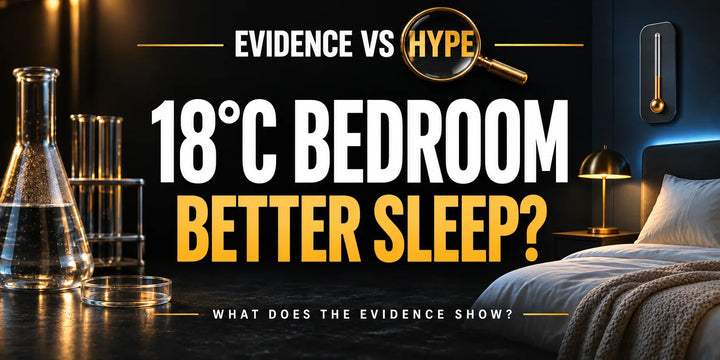
Evidence vs Hype editorial illustration asking whether an 18 degrees Celsius bedroom improves sleep, with a bed and wall thermometer.

Is 18°C Really the Best Bedroom Temperature for Everyone?

Hot bedrooms can disturb sleep, but 18°C is not a proven universal optimum. We examine experiments, older-adult research and cold-housing guidance.

Read the evidence →
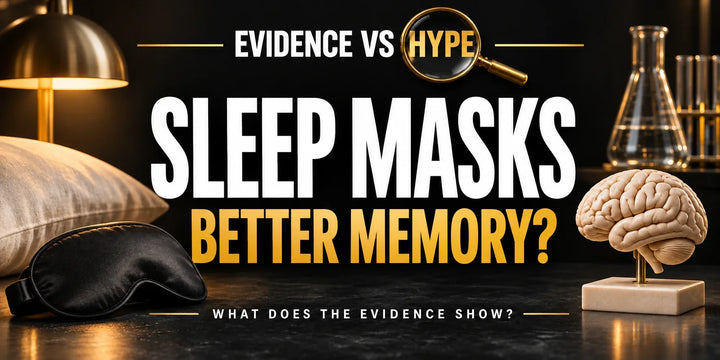
Evidence vs Hype editorial illustration asking whether a sleep mask improves memory, with a black eye mask, pillow and brain teaching model.

Can Wearing an Eye Mask Really Improve Your Memory and Alertness?

Eye masks block unwanted light, but claims of better next-day memory rest on small, debated experiments. Here is what the studies can and cannot establish.

Read the evidence →
Evidence vs Hype: melatonin lotion—better sleep? Plain lotion bottle, towel, sleep mask and clock.

Do Melatonin Lotions and Bath Products Really Improve Sleep?

Some lotions can deliver melatonin through the skin, but dependable night-time sleep benefits remain unproven. A comforting bedtime routine and an effective sleep treatment are different things.

Read the evidence →
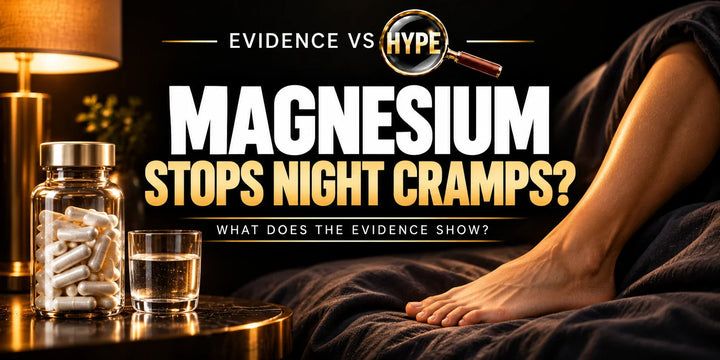
Evidence vs Hype: magnesium — stops night cramps? Unbranded capsules, water and a resting lower leg.

Does Magnesium Really Stop Night-Time Leg Cramps?

WEAK — Routine magnesium supplementation has generally not reduced unexplained night-time cramps more than placebo in older adults. One longer trial of a specific preparation was positive, so the evidence is...

Read the evidence →
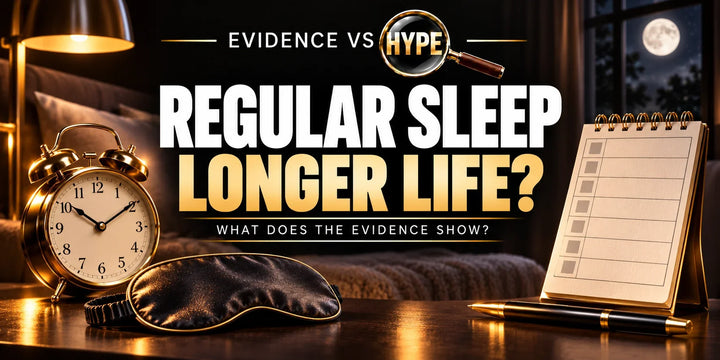
Evidence vs Hype: regular sleep — longer life? Bedside clock, eye mask and weekly sleep diary.

Can a Regular Sleep Schedule Really Help You Live Longer?

LIMITED — More regular sleep is associated with lower mortality in large observational studies. That makes regularity worth taking seriously. It does not prove that changing your timetable extends life, or t...

Read the evidence →
Evidence vs Hype editorial illustration of a weekend alarm clock beside a restful bed and a subtle weekly calendar.

Can Weekend Catch-Up Sleep Undo a Week of Short Nights?

WEAK — Two recovery nights have not been shown to fully reverse the metabolic effects of repeated short weekday sleep. Extra rest can still be useful; the weak claim is that a weekend completely cancels the ...

Read the evidence →
Evidence vs Hype editorial illustration of two welcoming separate beds in adjoining warm-lit sleep spaces, without relationship conflict.

Does a Sleep Divorce Really Improve Your Sleep?

LIMITED — Sleeping separately may help when a partner's noise, movements or schedule is the actual source of disruption. Direct evidence for a general sleep benefit is limited, and some couples sleep well to...

Read the evidence →
Evidence vs Hype editorial image of an unbranded bedside sound machine in a dark bedroom, asking if pink noise improves sleep.

Does Pink Noise Really Help You Sleep Better?

UNCLEAR — It is unclear whether continuous pink noise reliably improves sleep. A 2026 laboratory experiment found reduced REM sleep, even though masking some environmental disturbances can help particular sl...

Read the evidence →
Evidence vs Hype editorial illustration of pneumatic compression boots beside a training bench: compression boots and recovery.

Do Compression Boots Really Speed Up Exercise Recovery?

LIMITED — Compression boots may make sore legs feel better, but convincing evidence that they meaningfully restore performance faster is limited. Feeling recovered and being ready to perform are different ou...

Read the evidence →
Evidence vs Hype artwork with an untouched wine glass beside an alarm clock and a bed, asking whether a nightcap reduces REM sleep.

Can Alcohol Really Reduce REM Sleep Even If It Helps You Doze Off?

STRONG — Alcohol before bed can delay and reduce REM sleep, even when it feels sedating. Falling asleep more quickly is a different outcome from preserving normal sleep architecture.

Read the evidence →
Evidence vs Hype artwork showing a tired adult at a desk and an unbranded alarm clock, asking whether sleep loss slows reactions; no driving scene.

Does Losing Sleep Really Slow Your Reactions and Attention?

STRONG — Experimental sleep loss reliably impairs sustained attention and reaction-time performance on average. Feeling accustomed to short nights is not the same as demonstrating that attention has recovered.

Read the evidence →
Evidence vs Hype artwork with a CPAP machine and an adult wearing a nasal mask in bed, asking about daytime sleepiness.

Does CPAP Really Reduce Daytime Sleepiness in Sleep Apnoea?

STRONG — Positive airway pressure reduces excessive daytime sleepiness in adults with obstructive sleep apnoea. It treats a diagnosed breathing disorder; it is not a general sleep gadget or a proven guarante...

Read the evidence →
Black-and-gold Evidence vs Hype artwork with coffee and a bedside scene asking whether quitting caffeine improves sleep.

Does Quitting Caffeine Really Improve Sleep, Anxiety and Energy?

LIMITED — Reducing caffeine may help when it contributes to poor sleep or jitteriness. But deliberate abstinence does not reliably improve every habitual user's sleep, and better long-term energy after a 30-...

Read the evidence →
Black-and-gold Evidence vs Hype artwork showing an unbranded smartwatch beside a sleeping adult; asks whether watches detect sleep apnoea.

Can Smartwatches Really Detect Sleep Apnoea?

MODERATE — Selected, validated smartwatch features can flag possible moderate-to-severe obstructive sleep apnoea. They do not diagnose it, identify every case or make a normal watch result an all-clear.

Read the evidence →
L-tryptophan capsules on a bedside table illustrate the sleep evidence investigation.

Does L-Tryptophan Really Improve Sleep?

LIMITED — There is a limited human signal, particularly for less time awake after falling asleep. Evidence is much less consistent for falling asleep faster, sleeping longer or broadly treating insomnia. The...

Read the evidence →
Evidence vs Hype investigates the Huberman sleep stack with capsules and a warmly lit bedside scene.

Does the Huberman Sleep Stack Actually Improve Sleep?

WEAK — The combination has now been tested, but the recent short trial did not establish a consistent sleep benefit from its evening stack. Some ingredients have encouraging results individually; adding them...

Read the evidence →
Evidence vs Hype conceptual artwork investigating menopause HRT, using subject-specific unbranded imagery.

Does Menopause HRT Really Reduce Hot Flushes and Night Sweats?

STRONG — Yes. Systemic hormone replacement therapy is effective for menopausal vasomotor symptoms. Whether it is suitable for a particular person depends on symptoms, medical history, formulation and individ...

Read the evidence →
Evidence vs Hype conceptual artwork investigating contactless sleep tracker, using subject-specific unbranded imagery.

Can Contactless Sleep Trackers Really Detect Sleep Apnoea?

MODERATE — Some contactless devices have encouraging validation against clinical sleep tests, especially for identifying moderate or severe obstructive sleep apnoea. Results are device-specific; an ordinary ...

Read the evidence →
Evidence vs Hype conceptual artwork investigating PEMF sleep mat, using subject-specific unbranded imagery.

Do PEMF Sleep Mats Really Improve Deep Sleep and Muscle Recovery?

WEAK — Some pulsed-magnetic treatments have reported sleep benefits, but devices and outcomes differ. Evidence that ordinary whole-body sleep mats reliably increase measured deep sleep or speed training reco...

Read the evidence →
Black and gold Evidence vs Hype salt-stomping artwork with a tray of salt near bare feet at bedtime, asking about better sleep.

Does Salt Stomping Before Bed Really Improve Sleep?

WEAK — Direct evidence for a salt-specific sleep or cortisol benefit was not identified. Cream and footbath studies cannot establish dry-salt effects.

Read the evidence →
Evidence vs Hype melatonin gummies artwork with purple gummies, a bedside clock and an adult resting in bed.

Do Melatonin Gummies Really Improve Sleep, or Is the Hype Overstated?

LIMITED — Melatonin can help selected sleep-timing problems and may modestly shorten sleep onset. Evidence does not establish ordinary gummies as a dependable nightly cure for insomnia.

Read the evidence →
Evidence vs Hype bedroom-air investigation artwork showing a sleeping adult, an open window and a CO₂ monitor. Its illustrative 1200 ppm reading is not a medical danger threshold.

Can Bedroom CO₂ Levels Really Affect Your Deep Sleep?

LIMITED — Poor bedroom ventilation may disturb sleep. CO₂ often tracks other changing air conditions, so a monitor reading cannot prove what caused a bad night.

Read the evidence →
Evidence vs Hype ergonomic-pillow investigation artwork showing an adult sleeping on their side on a contoured pillow. Conceptual illustration without a promise of neck-pain relief.

Can Ergonomic Side-Sleeper Pillows Really Fix Neck Pain?

LIMITED — Some pillows may reduce neck symptoms, but contour designs do not reliably improve sleep or outperform ordinary pillows. Fit matters more than a cure claim.

Read the evidence →
Evidence vs Hype floor-mattress artwork showing a thin Japanese shikibuton on tatami and a conceptual spine inset. It does not depict proven pain relief.

Does Sleeping on a Japanese Floor Mattress Improve Back Pain?

WEAK — A Japanese floor mattress has no proven back-pain advantage. We assess firmness trials, comfort and the gap in direct floor-sleeping evidence.

Read the evidence →
Evidence vs Hype: a sleeping adult and an unbranded sleep headband, with abstract sound arcs in a gold-ring inset. Conceptual acoustic-stimulation artwork.

Can Smart Sleep Technology Really Increase Deep Sleep and Improve Memory?

LIMITED — Timed sound can influence sleep rhythms. We assess closed-loop stimulation, mixed memory trials and why a brain-wave change is not automatically more deep sleep.

Read the evidence →
Evidence vs Hype: tart cherries and cherry juice beside a dumbbell and workout towel, with a strength-training grip inset. Conceptual recovery artwork.

Does Tart Cherry Juice Really Speed Up Muscle Recovery?

LIMITED — Tart cherry may support selected recovery outcomes. We compare soreness, strength, performance and inflammatory markers, including conflicting 2026 reviews.

Read the evidence →
Evidence vs Hype: an adult beside an unbranded bright-light box on a winter morning. Conceptual artwork, not a promise of treatment response.

Does Bright Light Therapy Really Work for Seasonal Depression?

MODERATE — Bright light therapy can help some people with winter-pattern seasonal depression when the device, timing and exposure follow a studied protocol. It is not a guaranteed cure, and evidence for prev...

Read the evidence →
Evidence vs Hype: an adult sleeping comfortably on their side with a gold-ring pillow detail. Conceptual artwork for the snoring and positional sleep-apnoea investigation.

Does Sleeping on Your Side Really Reduce Snoring and Sleep Apnoea?

MODERATE — Side sleeping can reduce snoring for some people, and structured positional therapy can reduce breathing interruptions when obstructive sleep apnoea is substantially worse on the back. It does not...

Read the evidence →
Evidence vs Hype: comfortable loose bed socks worn by an adult resting under bedding, gold-ring textile inset. Conceptual artwork for the investigation.

Does Sleeping in Socks Really Help You Fall Asleep Faster?

Warming cold feet is biologically plausible and a very small experiment found faster sleep onset with bed socks. The result is promising but far from a universal rule: only six young men were studied under s...

Read the evidence →
Evidence vs Hype: chamomile flowers and herbal tea beside softly folded bed linen. Conceptual artwork for the investigation.

Does Chamomile Tea Really Improve Sleep Quality?

Chamomile may improve some people's reported sleep quality, but evidence for ordinary tea is limited and inconsistent. Research combining teas and extracts does not establish that a bedtime cup reliably trea...

Read the evidence →
Evidence vs Hype: two kiwi fruits one cut open beside softly folded bed linen. Conceptual artwork for the investigation.

Can Eating Two Kiwis Before Bed Really Improve Sleep?

Small studies report encouraging changes, but much of the popular claim comes from uncontrolled before-and-after research. A small controlled study did not show clear improvements in key objective sleep meas...

Read the evidence →
Glycine powder and sleep imagery in the black, white and gold Evidence vs Hype featured image.

Does Taking Glycine Before Bed Really Improve Sleep Quality?

LIMITED — Does glycine before bed improve sleep? We examine small human trials, a systematic review and the difference between promising findings and insomnia treatment.

Read the evidence →
Unbranded peptide vials and recovery imagery in the black, white and gold Evidence vs Hype featured image.

Do CJC-1295 and Ipamorelin Peptides Really Boost Recovery and Reverse Ageing?

WEAK — Do CJC-1295 and ipamorelin improve recovery or reverse ageing? We examine human hormone studies, regulatory concerns and the missing clinical outcomes.

Read the evidence →
Smart ring and sleeping person in the black, white and gold Evidence vs Hype featured image.

Can Smart Rings Really Measure Your Deep Sleep Accurately?

LIMITED — Can smart rings accurately measure deep sleep? We compare polysomnography validation, a meta-analysis and real-world sleep-clinic findings.

Read the evidence →
Massage gun and post-exercise recovery imagery in the black, white and gold Evidence vs Hype featured image.

Do Massage Guns Really Remove Lactic Acid and Speed Recovery?

WEAK — Do massage guns remove lactic acid? We separate lactate physiology from short-term flexibility, soreness and actual recovery of performance.

Read the evidence →
Evidence vs Hype caffeine and sleep investigation with coffee, a bedside clock and white pillow in the established black, white and gold template.

Does Caffeine Disrupt Sleep Even Six Hours Before Bed?

STRONG — Caffeine can disrupt sleep six hours before bedtime, especially at substantial doses. A universal cut-off cannot account for dose and individual sensitivity.

Read the evidence →

Browse the complete Sleep & Recovery collection →

Evidence first. Products second.

The Evidence Shelf: Sleep & Recovery

Useful for defined needs. Start with who may benefit, then consider whether buying anything would add value.

Editorial imagery for the sleep recovery buying guide

UK-led options. Evidence applies to the defined use; formulas and guidance can differ by country.

Illustrative cbt-i insomnia resource imagery; not the exact commercial example

Illustrative product type

CBT-I insomnia resource

STRONGEvidence for multicomponent CBT-I

This rates CBT-I programmes. Evidence for the exact book is LIMITED.

Best supported for

Multicomponent CBT-I improves chronic insomnia.

Why we selected it

A verified edition provides a structured resource; the evidence rates CBT-I programmes.

Do you actually need it?

Useful for persistent insomnia when structured CBT-I is appropriate.

Safety before use: Sleep restriction can initially increase sleepiness. Driving/high-risk work, poorly controlled seizures and vulnerability to mania require assessment or adaptation.

Who may benefit & who can skip it

You might benefit: Adults with persistent insomnia who can engage with structured exercises, ideally with suitable professional support.

You probably do not need it: People whose sleep is already satisfactory, or who primarily need assessment for sleep apnoea or another untreated cause.

What to look for & important limitations

What to look for

Match the 2021 second edition and format. The verified UK publisher page is the ebook, ISBN 9781472141408. Multicomponent CBT-I includes sleep monitoring, stimulus control, cognitive work and carefully adapted sleep scheduling.

Important limitations

AASM strongly recommends multicomponent CBT-I; its recommendation relies mainly on professionally delivered treatment. It does not establish that buying this particular book reproduces therapist outcomes. The book is a structured implementation resource, not a separately proven cure.

Ordinary or free alternatives

Potentially good value when the reader uses the exercises. Access to guided CBT-I may be more appropriate than buying additional sleep products.

The evidence & product checks

The evidence

What is checked about the product?

The publisher confirms the author, edition and ebook ISBN. STRONG refers to multicomponent CBT-I; this retail book has not been verified as reproducing therapist-delivered outcomes.

Intervention evidence, product-label checks and independent testing are separate. These examples are not claims that one brand is scientifically best.

A blackout mask can be a practical light-blocking accessory, with LIMITED evidence for some next-day outcomes. It is not an equivalent treatment for chronic insomnia. Routine magnesium, blue-light glasses and a general UK melatonin supplement card are not included.

Evidence reviewed: October 2026. Ratings assess the stated intervention and outcome, not a brand. Product links here are ordinary links with no affiliate tracking. We have not laboratory-tested these products. Affiliate disclosure · How we assess evidence.

Explore all nine Shelf categories →