Evidence, organised

Longevity & Biohacking

Explore longevity promises, cold exposure, light-based devices and emerging biohacking interventions.

Animal lifespan findings, changes in biological markers and longer human life are different levels of evidence. We follow those distinctions through the research and explain when an attractive mechanism remains an untested promise.

Questions to explore

More investigations to explore

Explore relevant Evidence Shelf recommendations →

Filter by topic, evidence or outcome

Browse by category

Evidence rating

Ratings describe support for the exact claim, not whether an ingredient is good or bad. Investigations with mixed claim-specific ratings remain in All ratings until an overall rating is designated.

More filters

Choose an ingredient or topic and an outcome to narrow your results.

Browse published investigations below.

Evidence vs Hype editorial still life of an unbranded medicine vial beside a laboratory notebook and hourglass, asking whether rapamycin extends human life.

Can Rapamycin Really Help Healthy People Live Longer?

WEAK — Rapamycin extends lifespan in important animal research, but longer life in otherwise healthy humans remains unproven. Human trials show selected signals, null findings and safety questions rather tha...

Read the evidence →
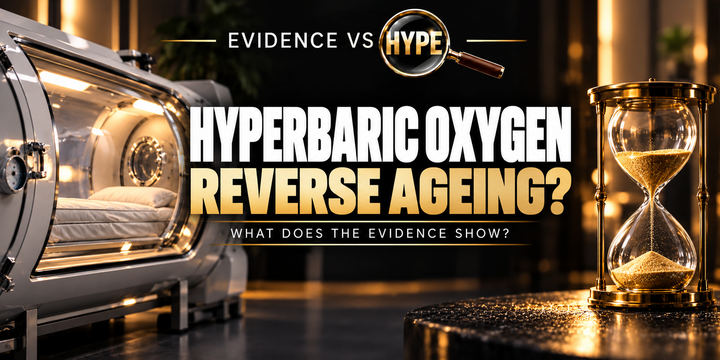
Evidence vs Hype editorial illustration of a clean unbranded clinical hyperbaric chamber, with no rejuvenation or lifespan guarantee.

Can Hyperbaric Oxygen Really Reverse Ageing?

WEAK — Hyperbaric oxygen has not been shown to reverse whole-body ageing or extend healthy human life. Interesting changes in blood-cell markers are preliminary evidence, not proof of rejuvenation.

Read the evidence →
Evidence vs Hype artwork showing a hand using a grip trainer and an older adult walking, asking whether grip training extends life.

Can Training Your Grip Strength Really Help You Live Longer?

WEAK — Lower grip strength is consistently associated with higher mortality risk. That does not demonstrate that grip-specific training extends life. Improving a predictor is not automatically the same as ch...

Read the evidence →
An adult woman performs a small two-footed jump in an exercise room beside weights, illustrating impact exercise and bone-health claims.

Can 50 Jumps Every Morning Really Strengthen Your Bones?

MODERATE — Brief jump training can improve hip bone mineral density in some people, and 50 jumps has genuinely been studied. The same programme did not benefit every group. Morning timing, exactly 50 repetit...

Read the evidence →
Three sealed research-style vials and a skin-texture magnifier illustrate the GLOW peptide blend investigation.

Does the GLOW Peptide Blend Really Repair Skin and Heal Injuries?

WEAK — Direct controlled human evidence for the GLOW combination was not identified in this review. Repair-related biology and limited component research do not establish that mixing these peptides improves ...

Read the evidence →
Evidence vs Hype conceptual artwork investigating balance exercises prevent falls, using subject-specific unbranded imagery.

Do Balance Exercises Really Prevent Falls in Older Adults?

STRONG — Yes. Programmes that challenge balance and functional movement reduce falls in community-dwelling older adults. The evidence concerns repeated, appropriate training, not a single balance trick or a ...

Read the evidence →
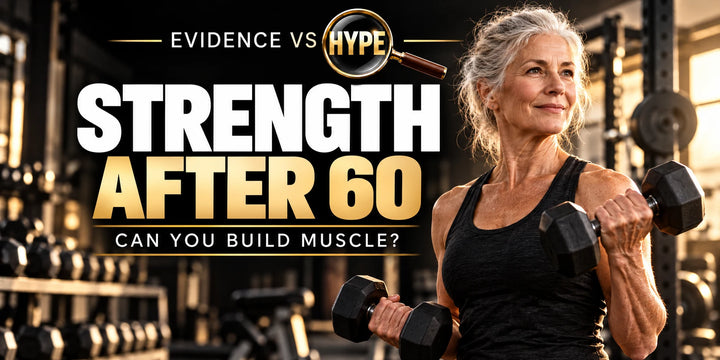
Evidence vs Hype conceptual artwork investigating build muscle after 60, using subject-specific unbranded imagery.

Can Strength Training Really Build Muscle After 60?

STRONG — Yes. Older adults retain the ability to gain strength and lean tissue through appropriately progressed resistance training. Average gains vary, and increasing strength is not the same as guaranteein...

Read the evidence →
Evidence vs Hype conceptual artwork investigating PEMF sleep mat, using subject-specific unbranded imagery.

Do PEMF Sleep Mats Really Improve Deep Sleep and Muscle Recovery?

WEAK — Some pulsed-magnetic treatments have reported sleep benefits, but devices and outcomes differ. Evidence that ordinary whole-body sleep mats reliably increase measured deep sleep or speed training reco...

Read the evidence →
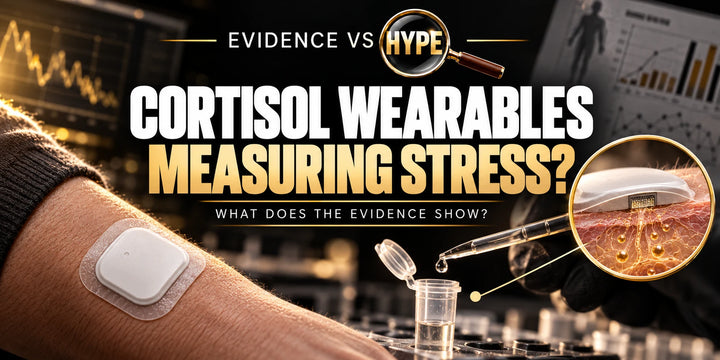
Evidence vs Hype conceptual artwork investigating wearable cortisol sensor, using subject-specific unbranded imagery.

Can Wearable Cortisol Meters Really Measure Your Stress Accurately?

LIMITED — Wearable sensors can detect cortisol in experimental settings, but chemical detection and a clinically accurate stress reading are different achievements. Most evidence does not establish an everyd...

Read the evidence →
Evidence vs Hype conceptual artwork investigating microplastics cell damage, using subject-specific unbranded imagery.

Are Microplastics Really Damaging Your Cells? What Human Research Shows

UNCLEAR — Laboratory studies provide reasons for concern, and human studies increasingly report associations with poorer health. They do not yet establish how much everyday exposure causes particular disease...

Read the evidence →
Evidence vs Hype conceptual artwork investigating TB-500, using subject-specific unbranded imagery.

Does TB-500 Really Heal Tendons, Ligaments and Injuries Faster?

WEAK — Reliable human evidence for faster injury healing from the TB-500 fragment has not been established. Research on full-length thymosin beta-4 cannot simply be transferred to a differently identified pr...

Read the evidence →
Evidence vs Hype conceptual artwork investigating KPV peptide, using subject-specific unbranded imagery.

Does the KPV Peptide Really Reduce Gut Inflammation and Heal Your Skin?

WEAK — KPV has anti-inflammatory effects in cells and mouse models. Verified clinical evidence that it treats gut disease or heals skin in living people is missing from the regulatory evidence assessed here;...

Read the evidence →
Evidence vs Hype conceptual artwork asking whether senolytic skin cream reverses skin age, with an unbranded cream jar and skin detail.

Can a Senolytic Skin Cream Really Reverse Your Biological Skin Age?

WEAK — Early human studies show interesting skin and biomarker changes. They do not yet establish lasting reversal of skin ageing, and an experimental medicine is different from a cosmetic sold as senolytic.

Read the evidence →
Questioning Evidence vs Hype editorial artwork of unbranded nicotine pouches asking about clean focus; no person using nicotine.

Do “Clean Nicotine” Pouches Really Improve Focus in Non-Smokers?

LIMITED — Nicotine has small acute effects on selected attention tasks. Direct evidence for pouches as a useful, safe focus tool in nicotine-naive adults is weak.

Read the evidence →
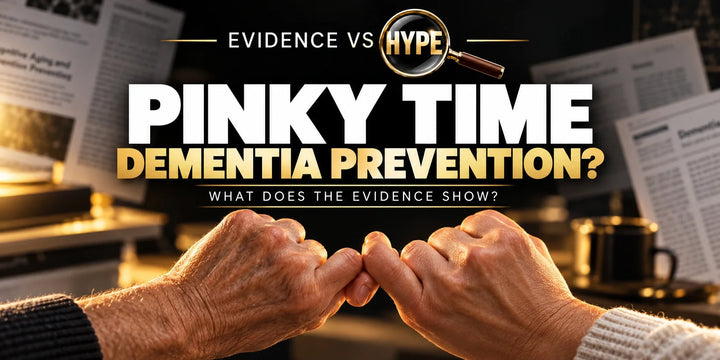
Evidence vs Hype pinky-time artwork with adult hands and a dementia-prevention question; a conceptual image, not a diagnostic demonstration.

Can “Pinky Time” Finger Exercises Really Prevent Dementia?

WEAK — Structured finger programmes have some cognitive research, but the viral movement is not established as dementia prevention or a diagnostic test.

Read the evidence →
Evidence vs Hype NAD+ skincare artwork with a generic serum bottle and mature skin portrait, asking whether skin ageing can be reversed.

Can NAD+ Face Serums Really Reverse Skin Ageing?

WEAK — Cellular and delivery research is interesting, but ordinary NAD+ serums have not been shown here to reverse human skin ageing.

Read the evidence →
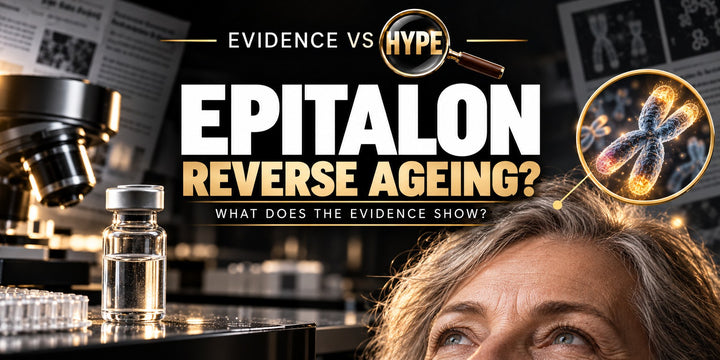
Evidence vs Hype epitalon artwork with a sealed laboratory sample, microscope, older adult and conceptual chromosome inset. It does not depict proven age reversal.

Does Epitalon Really Reverse Ageing and Extend Lifespan?

WEAK — Epitalon’s cell and animal findings do not demonstrate human age reversal. We separate telomere mechanisms, epithalamin claims and clinical safety gaps.

Read the evidence →
Evidence vs Hype: edible mushrooms and unlabelled capsules beside an older adult, with an anatomical brain inset. Conceptual artwork, not proven brain protection.

Can Ergothioneine Supplements Really Protect Your Brain From Ageing?

WEAK — Ergothioneine has promising biology, but brain protection remains unproven. We examine human uptake, observational research and the primary result of the 2025 trial.

Read the evidence →
Evidence vs Hype: a sleeping adult and an unbranded sleep headband, with abstract sound arcs in a gold-ring inset. Conceptual acoustic-stimulation artwork.

Can Smart Sleep Technology Really Increase Deep Sleep and Improve Memory?

LIMITED — Timed sound can influence sleep rhythms. We assess closed-loop stimulation, mixed memory trials and why a brain-wave change is not automatically more deep sleep.

Read the evidence →
Evidence vs Hype: wheat germ and unbranded supplement capsules with a conceptual brain inset. Conceptual artwork for the investigation.

Can Spermidine Supplements Really Reverse Brain Ageing?

Spermidine has interesting biological and animal research, but reversal of human brain ageing has not been demonstrated. A larger year-long trial did not improve its primary memory outcome. New exploratory b...

Read the evidence →
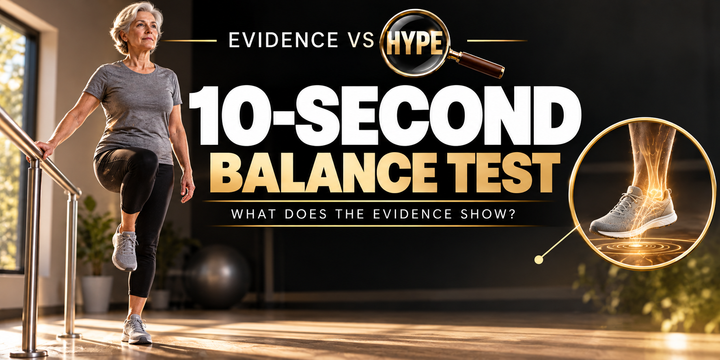
Evidence vs Hype: an older adult balancing on one leg near a support rail, no danger or death imagery. Conceptual artwork for the investigation.

Can Standing on One Leg for 10 Seconds Predict How Long You'll Live?

Failure to complete a ten-second one-leg stance was associated with higher mortality in one middle-aged and older cohort. It cannot tell an individual how many years they have left, and improving the score h...

Read the evidence →
Unbranded peptide vials and recovery imagery in the black, white and gold Evidence vs Hype featured image.

Do CJC-1295 and Ipamorelin Peptides Really Boost Recovery and Reverse Ageing?

WEAK — Do CJC-1295 and ipamorelin improve recovery or reverse ageing? We examine human hormone studies, regulatory concerns and the missing clinical outcomes.

Read the evidence →
Smart ring and sleeping person in the black, white and gold Evidence vs Hype featured image.

Can Smart Rings Really Measure Your Deep Sleep Accurately?

LIMITED — Can smart rings accurately measure deep sleep? We compare polysomnography validation, a meta-analysis and real-world sleep-clinic findings.

Read the evidence →
Laboratory testing and biological age imagery in the black, white and gold Evidence vs Hype featured image.

Can a Biological Age Test Really Prove You've Reversed Ageing?

WEAK — Can a biological age test prove you reversed ageing? We explain epigenetic clocks, measurement limits and what a controlled calorie-restriction trial found.

Read the evidence →
Evidence vs Hype: Does Fasting Activate Autophagy After Exactly 16 Hours? Conceptual editorial illustration.

Does Fasting Activate Autophagy After Exactly 16 Hours?

WEAK — Autophagy is an ongoing cellular process, not a repair switch known to turn on at exactly 16 hours. Nutrient availability can influence it, but human research has not established one threshold that ap...

Read the evidence →
Evidence vs Hype creatine and bone-health investigation with powder and scoop, an anatomical hip model and conceptual bone detail; no treatment outcome is implied.

Does Creatine Improve Bone Health or Prevent Osteoporosis?

WEAK — Creatine has not established an additional bone-density or osteoporosis-prevention benefit. Promising bone-geometry signals do not prove fewer fractures.

Read the evidence →
Evidence vs Hype creatine and ageing investigation, with creatine powder, an older adult holding a dumbbell and a conceptual muscle inset.

Does Creatine Help Older Adults Build Strength and Preserve Muscle?

MODERATE — Creatine can modestly improve strength gains alongside resistance training in healthy older adults. Muscle mass, function and frailty claims need more evidence.

Read the evidence →
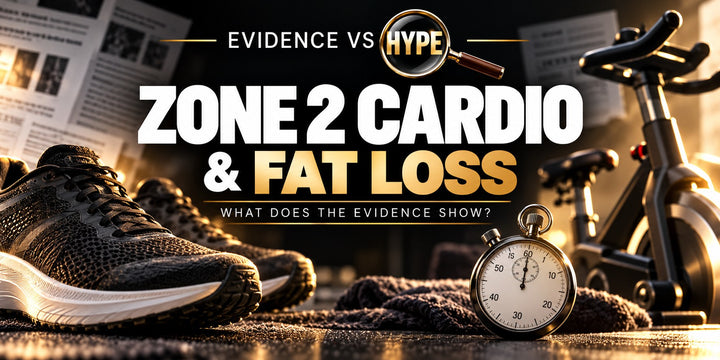
Evidence vs Hype Zone 2 cardio and fat loss investigation with running shoes and exercise bicycle

Is Zone 2 Cardio Really the Best Way to Burn Fat and Improve Longevity?

WEAK — Comfortable aerobic exercise can improve fitness and health. Burning a higher proportion of fat during a session does not prove superior long-term fat loss, and no intensity has been established as th...

Read the evidence →
Evidence vs Hype infrared sauna blankets and wellness investigation with black blanket on a bed

Do Infrared Sauna Blankets Really Detox Your Body, Burn Fat and Improve Recovery?

WEAK — A blanket can heat you and make you sweat. That is not evidence of meaningful detoxification, lasting fat loss or reliably faster recovery. Research on sauna rooms cannot automatically validate a blan...

Read the evidence →

Browse the complete Longevity & Biohacking collection →

Evidence first. Products second.

The Evidence Shelf: Longevity & Biohacking

Support strength and everyday function. No equipment or supplement on this Shelf is claimed to extend human lifespan.

Editorial imagery for the longevity biohacking buying guide

UK-led options. Evidence applies to the defined use; formulas and guidance can differ by country.

Illustrative resistance training equipment imagery; not the exact commercial example

Illustrative product type

Resistance training equipment

STRONGEvidence for progressive resistance training

Best supported for

Progressive resistance training improves strength and physical function.

Why we selected it

Accessible equipment earns a place when it allows suitable progression.

Do you actually need it?

Useful if you need equipment for progressive training. Existing weights or bodyweight may be enough.

Safety before use: Inspect bands for damage, avoid unsafe anchor points and protect eyes from recoil. Frailty, balance problems or major conditions may justify supervision and tailored progression.

Who may benefit & who can skip it

You might benefit: Adults, particularly older adults, who want an accessible progressive strength programme.

You probably do not need it: People who already have suitable weights, gym access or an adequately challenging bodyweight programme.

What to look for & important limitations

What to look for

The verified UK set contains three 1.5 m bands with extra-light, light and medium resistance. Choose enough progression for your ability and check latex status. A light beginner kit may not challenge a trained lifter.

Important limitations

Progressive resistance training improves strength and physical function. Falls evidence is strongest for balance/functional and multicomponent programmes, not resistance bands alone. No consumer kit has demonstrated extended human lifespan.

Ordinary or free alternatives

One of the most defensible longevity-category directions, provided the claim concerns function and the programme is explained.

The evidence & product checks

The evidence

What is checked about the product?

The current UK Performance Health retail page replaces the staging-page lead in the research. Evidence concerns progressive training, not a unique brand effect or lifespan extension.

Intervention evidence, product-label checks and independent testing are separate. These examples are not claims that one brand is scientifically best.

The research links above support this guide. A dedicated investigation is not yet available.

Why NMN is not a proven lifespan product → · Explore urolithin A →

Evidence reviewed: October 2026. Ratings assess the stated intervention and outcome, not a brand. Product links here are ordinary links with no affiliate tracking. We have not laboratory-tested these products. Affiliate disclosure · How we assess evidence.

Explore all nine Shelf categories →