
Evidence Library
Browse the claims, explore the research and understand what the evidence means for you.
Filter by topic, evidence or outcome
Browse by category
More filters
Choose an ingredient or topic and an outcome to narrow your results.
Browsing keyword: category:longevity-biohacking. View the complete library
Ratings apply to the specific claim assessed. Read each investigation for its findings and limitations.

Can Rapamycin Really Help Healthy People Live Longer?
WEAK — Rapamycin extends lifespan in important animal research, but longer life in otherwise healthy humans remains unproven. Human trials show selected signals, null findings and safety questions rather tha...
Read the evidence →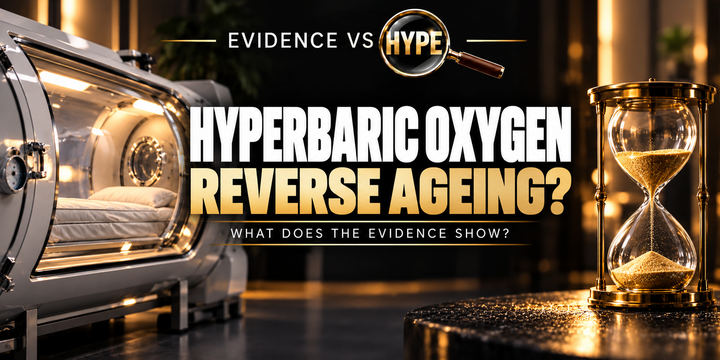
Can Hyperbaric Oxygen Really Reverse Ageing?
WEAK — Hyperbaric oxygen has not been shown to reverse whole-body ageing or extend healthy human life. Interesting changes in blood-cell markers are preliminary evidence, not proof of rejuvenation.
Read the evidence →
Can Training Your Grip Strength Really Help You Live Longer?
WEAK — Lower grip strength is consistently associated with higher mortality risk. That does not demonstrate that grip-specific training extends life. Improving a predictor is not automatically the same as ch...
Read the evidence →
Can 50 Jumps Every Morning Really Strengthen Your Bones?
MODERATE — Brief jump training can improve hip bone mineral density in some people, and 50 jumps has genuinely been studied. The same programme did not benefit every group. Morning timing, exactly 50 repetit...
Read the evidence →
Does the GLOW Peptide Blend Really Repair Skin and Heal Injuries?
WEAK — Direct controlled human evidence for the GLOW combination was not identified in this review. Repair-related biology and limited component research do not establish that mixing these peptides improves ...
Read the evidence →
Do Balance Exercises Really Prevent Falls in Older Adults?
STRONG — Yes. Programmes that challenge balance and functional movement reduce falls in community-dwelling older adults. The evidence concerns repeated, appropriate training, not a single balance trick or a ...
Read the evidence →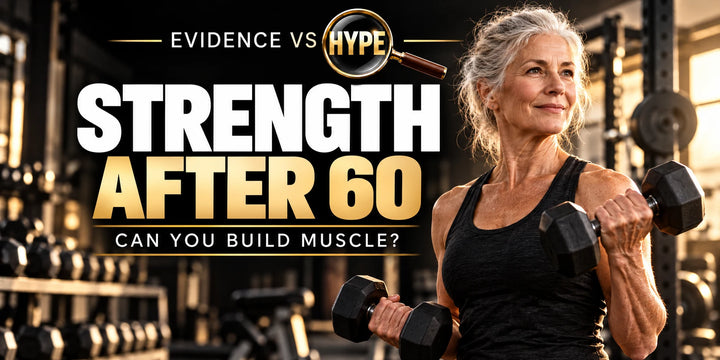
Can Strength Training Really Build Muscle After 60?
STRONG — Yes. Older adults retain the ability to gain strength and lean tissue through appropriately progressed resistance training. Average gains vary, and increasing strength is not the same as guaranteein...
Read the evidence →
Do PEMF Sleep Mats Really Improve Deep Sleep and Muscle Recovery?
WEAK — Some pulsed-magnetic treatments have reported sleep benefits, but devices and outcomes differ. Evidence that ordinary whole-body sleep mats reliably increase measured deep sleep or speed training reco...
Read the evidence →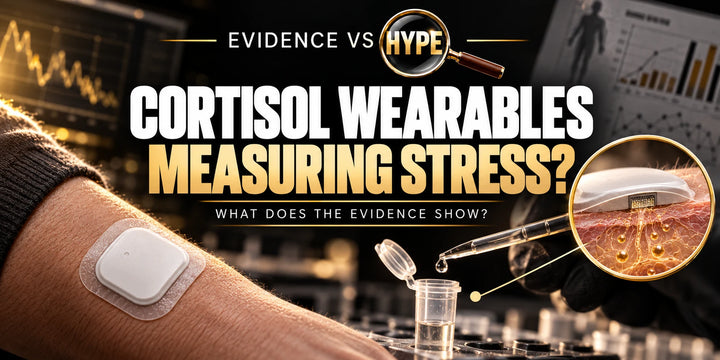
Can Wearable Cortisol Meters Really Measure Your Stress Accurately?
LIMITED — Wearable sensors can detect cortisol in experimental settings, but chemical detection and a clinically accurate stress reading are different achievements. Most evidence does not establish an everyd...
Read the evidence →
Are Microplastics Really Damaging Your Cells? What Human Research Shows
UNCLEAR — Laboratory studies provide reasons for concern, and human studies increasingly report associations with poorer health. They do not yet establish how much everyday exposure causes particular disease...
Read the evidence →
Does TB-500 Really Heal Tendons, Ligaments and Injuries Faster?
WEAK — Reliable human evidence for faster injury healing from the TB-500 fragment has not been established. Research on full-length thymosin beta-4 cannot simply be transferred to a differently identified pr...
Read the evidence →
Does the KPV Peptide Really Reduce Gut Inflammation and Heal Your Skin?
WEAK — KPV has anti-inflammatory effects in cells and mouse models. Verified clinical evidence that it treats gut disease or heals skin in living people is missing from the regulatory evidence assessed here;...
Read the evidence →