
Evidence Library
Browse the claims, explore the research and understand what the evidence means for you.
Filter by topic, evidence or outcome
Browse by category
More filters
Choose an ingredient or topic and an outcome to narrow your results.
Ratings apply to the specific claim assessed. Read each investigation for its findings and limitations.

Can Rapamycin Really Help Healthy People Live Longer?
WEAK — Rapamycin extends lifespan in important animal research, but longer life in otherwise healthy humans remains unproven. Human trials show selected signals, null findings and safety questions rather tha...
Read the evidence →
Can Hyperbaric Oxygen Really Reverse Ageing?
WEAK — Hyperbaric oxygen has not been shown to reverse whole-body ageing or extend healthy human life. Interesting changes in blood-cell markers are preliminary evidence, not proof of rejuvenation.
Read the evidence →
Can Exercise Really Reduce Cancer-Related Fatigue?
MODERATE — Appropriately adapted exercise can reduce cancer-related fatigue during and after treatment. Evidence is moderate, and the programme needs to fit the person's condition, treatment and capacity.
Read the evidence →
Is Gluten-Free Really Healthier If You Do Not Have Coeliac Disease?
WEAK — A gluten-free label does not make a diet healthier for someone without a gluten-related disorder. Some people have genuine reasons to avoid gluten or wheat, but a universal health advantage is not est...
Read the evidence →
Does Alkaline Water Really Improve Your Health by Changing Your pH?
WEAK — Alkaline water has not been shown to prevent disease or ageing by making the body more alkaline. Some mineral-rich waters affect selected measurements, but that is a much narrower claim than systemic ...
Read the evidence →
Does Sourdough Really Cause Smaller Blood-Sugar Spikes?
UNCLEAR — Sourdough does not reliably produce a smaller glucose response than otherwise comparable yeast bread. Results vary, and an August 2026 review found the evidence insufficient for a general advantage.
Read the evidence →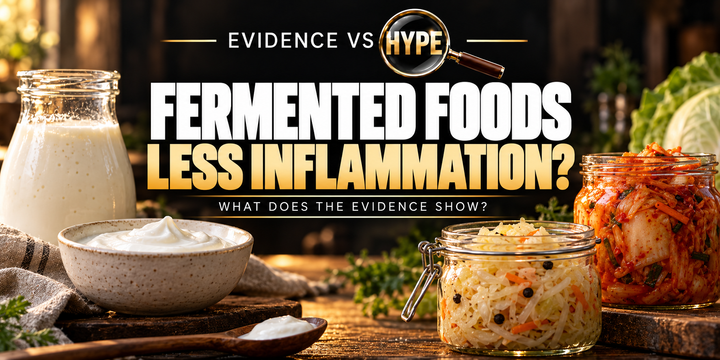
Do Fermented Foods Really Reduce Inflammation?
LIMITED — Some human trials suggest fermented-food diets can change the microbiome and inflammatory markers. Evidence that adding them consistently reduces systemic inflammation in healthy adults remains lim...
Read the evidence →
Can Ab Exercises Really Burn Belly Fat Specifically?
WEAK — Ab exercises are not a reliably established way to choose where body fat comes off. Most pooled evidence does not support spot reduction, although a small positive trial deserves fair consideration.
Read the evidence →
Can Supersets Build Muscle in Less Time?
MODERATE — Well-designed supersets can shorten workouts while producing similar gains in the available studies. Evidence is moderate, and exercise pairing matters: a shorter session can also feel harder.
Read the evidence →
Do Super-Slow Reps Really Build More Muscle?
WEAK — Deliberately slowing every repetition has not been shown to reliably build more muscle. A range of controlled tempos can work; extra time under tension is not automatically extra growth.
Read the evidence →
Do You Have to Train to Failure to Build Muscle?
WEAK — You do not have to take every working set to momentary muscular failure to build muscle. Training effort still matters, and stopping far short of failure is a different question.
Read the evidence →
Is Morning Exercise Really Better Than Evening Exercise?
UNCLEAR — No single time of day is established as best for everyone's health and training gains. Some effects depend on the outcome, the person and when performance is tested.
Read the evidence →