
Evidence Library
Browse the claims, explore the research and understand what the evidence means for you.
Filter by topic, evidence or outcome
Browse by category
More filters
Choose an ingredient or topic and an outcome to narrow your results.
Ratings apply to the specific claim assessed. Read each investigation for its findings and limitations.

Do Carbs During Long Workouts Really Improve Endurance?
STRONG — Carbohydrate during prolonged endurance exercise can improve performance compared with no carbohydrate. The benefit depends on the event and fuelling context; it does not mean every short workout ne...
Read the evidence →
Does Static Stretching Really Make You More Flexible?
STRONG — Regular static stretching improves joint range of motion. It does not follow that stretching permanently lengthens every muscle, prevents all injuries or needs to be painful to work.
Read the evidence →
Can Exercise Reduce Liver Fat Without Major Weight Loss?
STRONG — Structured exercise can reduce liver fat even without substantial weight loss. That is a real metabolic benefit, but an improved scan is not proof that exercise has reversed fibrosis or cured every ...
Read the evidence →
Does CPAP Really Reduce Daytime Sleepiness in Sleep Apnoea?
STRONG — Positive airway pressure reduces excessive daytime sleepiness in adults with obstructive sleep apnoea. It treats a diagnosed breathing disorder; it is not a general sleep gadget or a proven guarante...
Read the evidence →
Can a Mediterranean Diet Really Reduce Cardiovascular Events?
STRONG — Randomised dietary trials support fewer major cardiovascular events in higher-risk adults. The evidence concerns an eating pattern and support programme, rather than one superfood or a guarantee aga...
Read the evidence →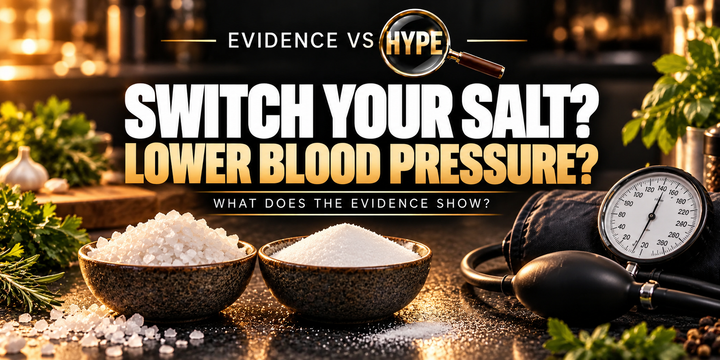
Can Potassium-Enriched Salt Really Lower Blood Pressure and Stroke Risk?
STRONG — Replacing ordinary salt with a lower-sodium, potassium-enriched alternative lowers blood pressure. Stroke benefits have also been demonstrated in high-risk adults, but potassium salt is unsuitable f...
Read the evidence →
Can Putting Your Hand on Your Heart Really Lower Cortisol and Stress?
LIMITED — A randomised experiment found a smaller cortisol response after a self-soothing-touch exercise, but participants did not clearly feel less stressed than controls. Newer trials suggest brief touch c...
Read the evidence →
Do Cluster Sets Really Build More Strength and Muscle?
WEAK — Cluster sets can reduce fatigue and help preserve repetition speed. They are a useful training option, but long-term research does not establish a general advantage for muscle growth or maximal streng...
Read the evidence →
Can Training Your Grip Strength Really Help You Live Longer?
WEAK — Lower grip strength is consistently associated with higher mortality risk. That does not demonstrate that grip-specific training extends life. Improving a predictor is not automatically the same as ch...
Read the evidence →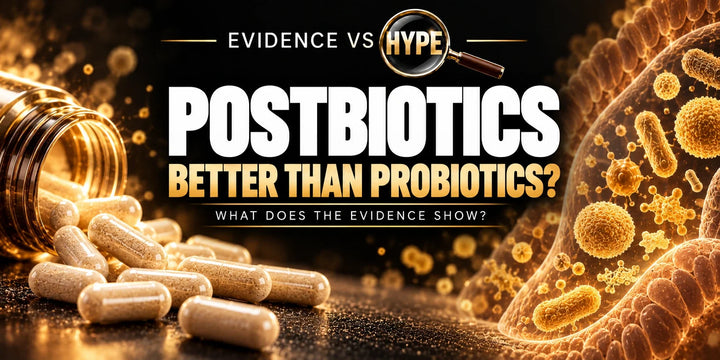
Are Postbiotics Really Better Than Probiotics for Gut Health?
WEAK — Certain inactivated bacterial preparations have evidence for particular benefits, including an IBS trial. That does not establish that postbiotics as a category work better than probiotics, or that an...
Read the evidence →
Can Creatine Really Help Treat Depression?
LIMITED — Some small trials suggest benefit when creatine is added to existing depression treatment. The evidence remains uncertain, and a recent meta-analysis found an average effect below its threshold for...
Read the evidence →
Can Your Face Really Reveal Low Iron or Ferritin?
WEAK — Iron deficiency can cause symptoms and anaemia can cause pallor. But appearance cannot reliably diagnose low iron, measure ferritin or identify the reason for a change. Blood tests and clinical contex...
Read the evidence →