
Evidence, organised

Heart & Metabolic Health

Explore claims about cholesterol, blood pressure, blood sugar, circulation, weight and metabolism.

Lowering a biomarker is not the same as demonstrating fewer heart attacks, and a short-term glucose response is not proof of sustained weight loss. Each investigation keeps those outcomes separate and explains the practical limits of the findings.

Questions to explore

More investigations to explore

Explore relevant Evidence Shelf recommendations →

Filter by topic, evidence or outcome

Browse by category

Evidence rating

Ratings describe support for the exact claim, not whether an ingredient is good or bad. Investigations with mixed claim-specific ratings remain in All ratings until an overall rating is designated.

More filters

Choose an ingredient or topic and an outcome to narrow your results.

Browse published investigations below.

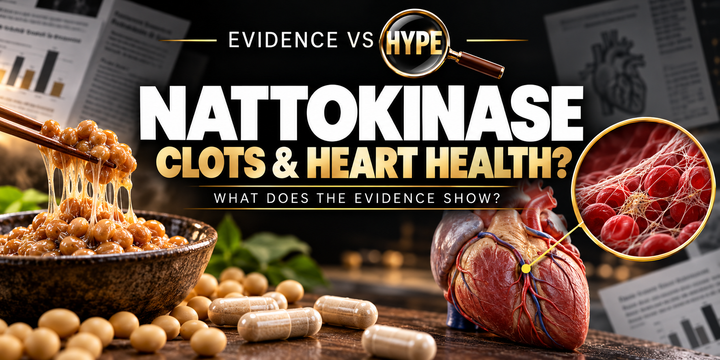
Evidence vs Hype nattokinase artwork with fermented natto and a heart; a conceptual fibrin inset illustrates clot-related claims without showing a clot being dissolved.

Does Nattokinase Really Dissolve Blood Clots and Protect Your Heart?

WEAK — Clot-related laboratory effects and small blood-pressure changes do not demonstrate prevention or treatment of dangerous clots. Bleeding risks and medication interactions matter.

Read the evidence →
Evidence vs Hype berberine artwork with capsules, an unbranded jar and a weighing scale; a conceptual metabolic inset accompanies the Nature’s Ozempic question.

Is Berberine Really “Nature’s Ozempic”?

Berberine has human metabolic research and a modest pooled weight-loss signal. It has not been shown equivalent to semaglutide, and the “Nature’s Ozempic” label conflates different interventions and evidence.

Read the evidence →
Black, white and gold Evidence vs Hype artwork of a supplement scoop, beetroot, dumbbell and athletic forearm; blood-flow and performance claims are being investigated.

Do Nitric Oxide Supplements Really Improve Blood Flow, Gym Performance and Muscle Pumps?

Nitric oxide is real biology, but NO boosters are not one intervention. We separate nitrate, citrulline and arginine evidence from generic blend promises.

Read the evidence →
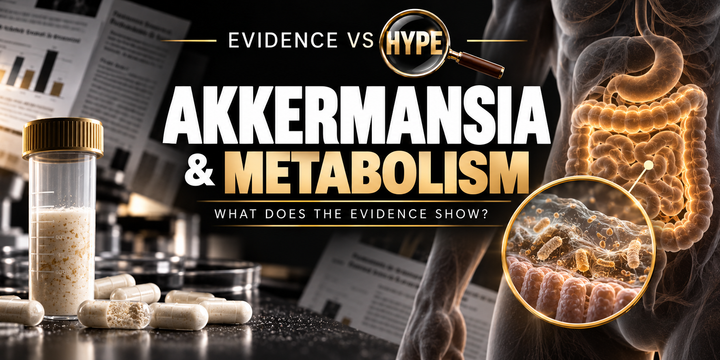
Black, white and gold scientific illustration of a gut and magnified bacteria with research papers; conceptual microbiome imagery, not a claim of gut repair.

Can Akkermansia Supplements Really Help You Lose Weight and Fix Your Metabolism?

Recent human trials make Akkermansia worth investigating. We separate reduced weight regain, a negative main metabolic endpoint and exploratory microbiome findings.

Read the evidence →
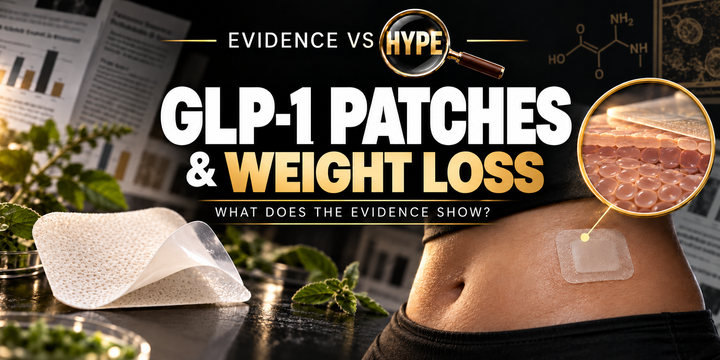
Black, white and gold scientific investigation of a plain adhesive patch and skin, with research papers; conceptual illustration, not proof of absorption or weight loss.

Do GLP-1 Patches Really Work for Weight Loss?

Prescription GLP-1 medicines work in studied settings. Can a non-prescription herbal patch borrow that evidence? We test the delivery, ingredients and finished-product claims.

Read the evidence →
Black, white and gold illustration of easy and brisk walking, shoes and a timer, representing interval walking without cultural stereotypes.

Is Japanese Walking Really Better Than 10,000 Steps?

Three minutes fast, three minutes easy: interval walking can be useful, but did the research really show it beats 10,000 daily steps?

Read the evidence →
Evidence vs Hype illustration of a weighted vest, a walking adult and a conceptual bone inset; bone-health benefits are being investigated.

Does Walking in a Weighted Vest Burn More Fat and Strengthen Your Bones?

Extra load can increase walking’s energy cost. We investigate whether weighted vests also produce lasting fat loss, stronger bones and later-life benefits.

Read the evidence →
Evidence vs Hype illustration of a vibration platform, an exercising figure and conceptual muscle research in black, white and gold.

Do Vibration Plates Really Burn Fat and Replace Exercise?

Vibration plates may help selected strength outcomes, but do they meaningfully burn fat or replace exercise? We separate the evidence from the marketing.

Read the evidence →
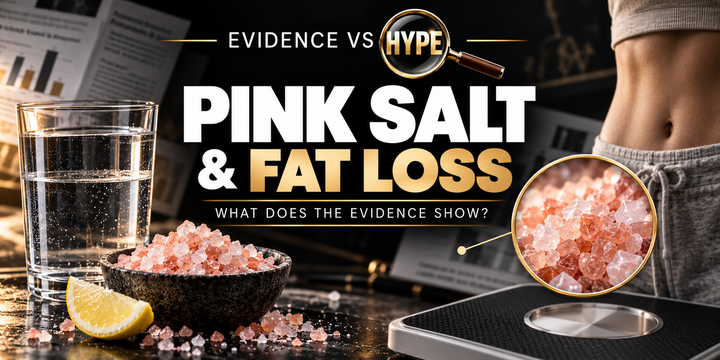
Evidence vs Hype pink salt investigation, showing pink salt crystals, water, lemon, scale and conceptual magnified salt.

Does the Viral Pink Salt Trick Really Burn Fat and Boost Metabolism?

Pink salt water sounds like a simple metabolism hack. We examine hydration, mineral claims, fat loss and why it is not a natural version of Mounjaro.

Read the evidence →
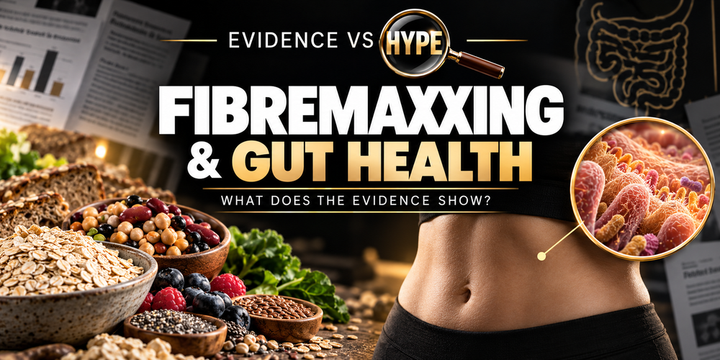
Evidence vs Hype fibremaxxing investigation, showing fibre-rich foods, an abdomen and a conceptual magnified intestinal microbiome.

Fibermaxxing: Is More Fibre Better for Gut Health and Longevity?

WEAK — Ever-higher fibre targets are not reliably supported. Adequate, varied fibre intake has MODERATE support; type, tolerance and food source matter.

Read the evidence →
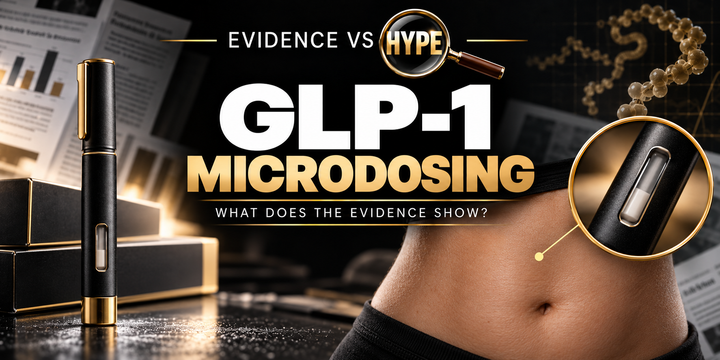
Evidence vs Hype GLP-1 microdosing investigation, with neutral capped injection pen, abdomen and magnified pen window.

GLP-1 Microdosing: Benefits, Side Effects and Evidence

Low doses can have biological effects. But do they preserve the benefits of studied GLP-1 treatment while avoiding its risks? We examine the latest evidence.

Read the evidence →
Evidence vs Hype: seed oils and inflammation, with oil, seeds and a magnified lipid-droplet illustration.

Do Seed Oils Cause Inflammation? What Human Evidence Shows

Do seed oils cause inflammation? Human trials, cardiovascular evidence and frying chemistry reveal why the oil, cooking method and replacement food matter.

Read the evidence →

Browse the complete Heart & Metabolic Health collection →

Evidence first. Products second.

The Evidence Shelf: Heart & Metabolic Health

Useful for defined needs. Start with who may benefit, then consider whether buying anything would add value.

Editorial imagery for the heart metabolic health buying guide

UK-led options. Evidence applies to the defined use; formulas and guidance can differ by country.

Generic upper-arm blood pressure monitor; validation applies only to the named model

Illustrative product type

Validated blood pressure monitor

STRONGEvidence for correct home measurement

Best supported for

Accurate home measurement with the exact validated model, correctly fitting cuff and proper technique.

Why we selected it

Check the exact model, independent validation and a cuff that fits.

Do you actually need it?

Useful when home monitoring has a purpose and a clear plan.

Safety before use: Wrong cuff size, position, movement or timing can distort readings. An irregular-heartbeat icon is not a diagnosis. Do not change medication based on one reading.

Who may benefit & who can skip it

You might benefit: Adults advised to track blood pressure, or following a clinician-agreed home-monitoring plan.

You probably do not need it: A device is not necessary simply to optimise every normal reading, and repeated anxious checking can be unhelpful.

What to look for & important limitations

What to look for

Match the full model code and independent validation listing, not just the brand name. Choose an upper-arm cuff that fits; the documented standard cuffs cover about 22–42 cm. HEM-7155-E is different from the newer M3 Comfort AFib.

Important limitations

Tucker et al. found that supported self-monitoring can improve BP management; monitoring alone did not clearly lower BP. The clinical value comes from accurate information used in a management plan.

Ordinary or free alternatives

Strong practical choice when readings will inform care. Extra Bluetooth features do not automatically improve accuracy or outcomes.

The evidence & product checks

The evidence

What is checked about the product?

STRIDE BP lists HEM-7155-E as an equivalent device; ValidateBP lists BP7150. Equivalent-device listing is different from a direct validation trial of that exact UK model. Current local seller, bundle and warranty remain to be checked.

Intervention evidence, product-label checks and independent testing are separate. These examples are not claims that one brand is scientifically best.

The research links above support this guide. A dedicated investigation is not yet available.

Defined-use recommendation

Plant sterols or stanols

STRONGEvidence for modest LDL reduction

Best supported for

Lowers LDL cholesterol modestly.

Why we selected it

The active amount and exact local formulation matter.

Do you actually need it?

An optional adjunct for elevated LDL; it does not replace prescribed treatment.

Safety before use: Avoid in sitosterolaemia. Not a routine recommendation for pregnancy, breastfeeding or young children. Review use with lipid medication and maintain fruit/vegetable intake.

Who may benefit & who can skip it

You might benefit: Adults with elevated LDL who want an adjunct to appropriate dietary and medical management.

You probably do not need it: People with normal LDL seeking proven extra longevity; people expecting a substitute for prescribed lipid therapy.

What to look for & important limitations

What to look for

A studied daily active amount with food, often around 1.5–2.4 g. The UK Original Yogurt Drink label states 2 g plant stanols per 67.5 g bottle. It contains milk; other flavours and formats may differ.

Important limitations

The 2026 umbrella and dose-response review supports LDL lowering, with generally high certainty for that biomarker. This is not direct evidence that the shortlisted products prevent heart attacks or extend life.

Ordinary or free alternatives

A conditional addition after lower-cost dietary changes and appropriate risk assessment. Compare ongoing cost per effective daily intake.

The evidence & product checks

The evidence

What is checked about the product?

The UK manufacturer documents the exact format and active amount. Label verification does not establish independent comparative efficacy or fewer heart attacks. No Amazon offer is cleared.

Intervention evidence, product-label checks and independent testing are separate. These examples are not claims that one brand is scientifically best.

Defined-use recommendation

Lower-sodium potassium salt

MODERATEEvidence for sodium reduction in suitable adults

Best supported for

Reduces sodium exposure; can lower BP and cardiovascular risk in suitable adults.

Why we selected it

The sodium/potassium blend and suitability need checking before use.

Do you actually need it?

Only for suitable adults who can safely increase potassium.

Safety before use: Kidney impairment, high potassium, potassium supplements and medicines affecting potassium need clinician/pharmacist review. WHO recommendation excludes pregnancy and children. Do not add extra substitute salt because it sounds healthy.

Who may benefit & who can skip it

You might benefit: Adults using table/cooking salt who have normal potassium handling and are suitable for a potassium-containing substitute.

You probably do not need it: People who do not use much discretionary salt, or anyone who should not increase potassium.

What to look for & important limitations

What to look for

Check sodium and potassium per serving. The major SSaSS trial used 75% sodium chloride / 25% potassium chloride. LoSalt and Morton Lite Salt use different blends; the trial result cannot be assigned directly to either brand.

Important limitations

SSaSS followed 20,995 high-risk Chinese adults for 4.74 years: stroke rates were 29.14 versus 33.65 per 1,000 person-years (rate ratio 0.86). Generalisation is limited by population, diet and formulation. WHO now conditionally supports replacing used table salt in suitable adults.

Ordinary or free alternatives

Potentially useful and low cost for the right person, with more clinical-outcome evidence than many expensive wellness supplements. Suitability checks are essential.

The evidence & product checks

The evidence

What is checked about the product?

No purchasing link is cleared. Current UK pack confirmation and local suitability checks remain open. Reducing salt overall is still useful; do not use more because a substitute sounds healthier.

Intervention evidence, product-label checks and independent testing are separate. These examples are not claims that one brand is scientifically best.

The research links above support this guide. A dedicated investigation is not yet available.

Evidence reviewed: October 2026. Ratings assess the stated intervention and outcome, not a brand. Product links here are ordinary links with no affiliate tracking. We have not laboratory-tested these products. Affiliate disclosure · How we assess evidence.

Explore all nine Shelf categories →