
Big claims.
Clear evidence.
We investigate the claims you see online, break down the research, and explain what it actually means for you.
Curiosity welcome. Jargon optional. Sources included.
Latest investigations
The newest claims under the lens, with evidence ratings and practical takeaways.

Can Rapamycin Really Help Healthy People Live Longer?
WEAK — Rapamycin extends lifespan in important animal research, but longer life in otherwise healthy humans remains unproven. Human trials sho...
Read the evidence →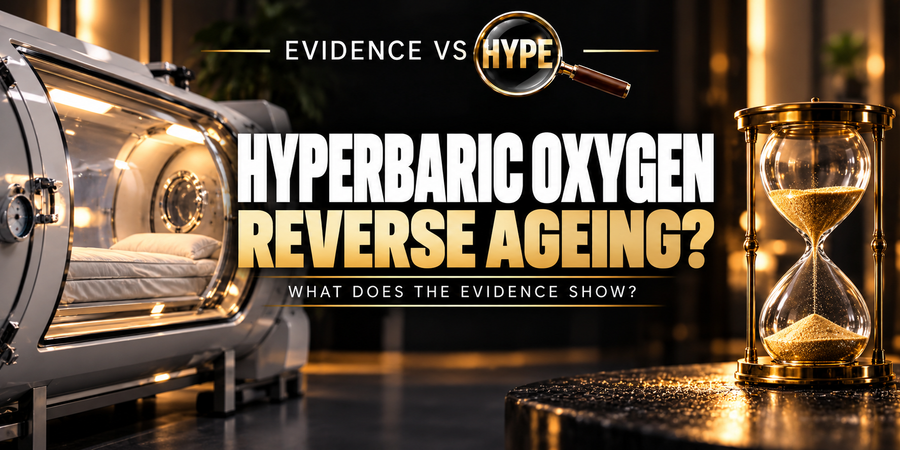
Can Hyperbaric Oxygen Really Reverse Ageing?
WEAK — Hyperbaric oxygen has not been shown to reverse whole-body ageing or extend healthy human life. Interesting changes in blood-cell marke...
Read the evidence →
Can Exercise Really Reduce Cancer-Related Fatigue?
MODERATE — Appropriately adapted exercise can reduce cancer-related fatigue during and after treatment. Evidence is moderate, and the programm...
Read the evidence →How strong is the evidence?
Ratings describe the strength and consistency of the research behind a specific claim. They are not product scores or guarantees.
Weak evidence is not proof that a claim is false. Each investigation explains the direction of the findings, who was studied and what remains uncertain.
What goes into a review?
We start with a precise question, then examine relevant research: study design, sample size, comparison groups, measured outcomes, consistency and potential bias. Human outcomes and direct tests of a claim carry more weight than a plausible mechanism alone.
We distinguish association from causation, explain important limitations and link to the sources. Completed investigations show a review date and any relevant commercial relationship. This is our editorial rating system, not a formal clinical guideline or a substitute for a systematic review.
Making research
useful for everyone.
Health and wellbeing advice is everywhere. Understanding what supports it should be easier.
Evidence vs Hype bridges the gap between research and everyday life. We start with the strongest reasonable version of a claim, examine the evidence and explain the useful takeaway in plain English.
No judgement for asking. No certainty where the research cannot offer it. Just a clearer place to start.
Evidence first. Products second.
THE EVIDENCE SHELF
Products worth considering.
Evidence worth understanding.
A considered collection for defined needs. Understand what works, whether you need it and what to look for before you buy.

Usefulness over popularity.
Start with your goal
Nine ways to explore
Recommendations, alternatives and honest limits.
How it earns a place
Evidence before the shopping list.
A useful recommendation starts with a defined outcome and a real need.
Read our evidence method →- Start with the scienceAssess the intervention, the outcome and the limits.
- Check the practical detailsMatch the product, label and local suitability.
- Consider buying nothingExplain ordinary alternatives and who can skip it.
Useful wherever you live. UK options lead the collection. Choose United Kingdom, United States, Canada, Australia, Germany or France on recommendation pages. Where no verified local purchasing link is available, the buying criteria remain available.
Evidence reviewed: October 2026. Product links currently have no affiliate tracking. Commercial relationships must not determine our ratings. We have not laboratory-tested these products. Read the disclosure.
Original AI-generated editorial imagery illustrates product types, not branded products, validation marks or endorsements.

Before you believe another health headline…
Get our free Hype Spotter guide. Seven practical questions to help you recognise misleading claims, understand the evidence and avoid wasting money on things that might not work.
Your 12-page guide and one-page checklist arrive by email.
By subscribing, you agree to receive the free guide, five welcome emails over ten days, then The Evidence Brief once a week. Unsubscribe at any time. Privacy policy.